
Wednesday, Jan. 19, 2022. 3:30 PM. 85°F, clear and sunny with a cool breeze.
It’s sad enough the hours of life you lose to work, but it’s all the more compounded when the days that pass by are absolutely beautiful.
That certainly was in the back of my mind as I watched the days go by between the moment I finally received my Canon A-1 and my weekend. How badly I wanted to go out to shoot with it, to really put to the test all the videos and articles I’d been reading on its functions and the general tips on getting great exposures for film.
Finally the day I’d been anticipating rolled around. And, thankfully, it followed the trend of near perfect weather.
Being Texas in the winter, of course, this would be a moment I’d have to take advantage of or else be in for more of a wait. While we were enjoying spring-like weather at the time, the very next day promised a dip into the 40s with rain and sleet possibilities. It’s always an interesting dynamic — venturing out in shorts that afternoon knowing the very next day would be sweatpants and pozole weather.

I dwell on the weather mainly because I knew it would determine more the kind of shooting I hoped to do than what I was used to dealing with using my DSLR. I’m at the point where I’m still learning film, and I’m cutting my teeth on a pretty basic color stock: Kodak Ultramax 400.
Forgive the boring tech talk to follow.
When I was a kid, the numbers on the box never really meant anything to me. However, now I know it’s indicative of the film’s speed or ISO/ASA — its sensitivity to light. 400 is a speed I understand to be relatively flexible — a good middle ground between the slower speeds (200 and less) that are meant more for bright sunny days and the faster speeds (up to 3200) which perform best in low light or night situations.
This was important to keep in mind because my lens, the 50mm f1.4, certainly has a wealth of aperture settings that I hadn’t used before — namely the 2.8 and lower settings. Such wide apertures promised beautifully blurred backgrounds when focusing on subjects, but the dynamic I’d never really considered when shooting digital is that now the film’s speed factored in here. Open up that aperture too much, and I’d risk overexposing. That’s not to say ISO isn’t a factor in digital photography, because of course it is. But like I’ve mentioned previously, I’d mainly shot in Aperture Priority mode where the camera basically handled ISO and shutter speed. Now, I felt I had to pay closer attention because the speed of the film couldn’t exactly change. It’s a physical property.
In essence, in my mind so nurtured by the ease and flexibility of shooting digital, I wondered if I could still get away with shooting wide in sunny situations. I felt the only way I’d learn for sure, is the hard way.
I ventured out to a familiar haunt: The Hans and Pat Suter Wildlife Refuge. It became a favorite spot ever since I thought I saw an owl back in December and spent the next couple of weeks making it a point to stop and see if I could spot it again.
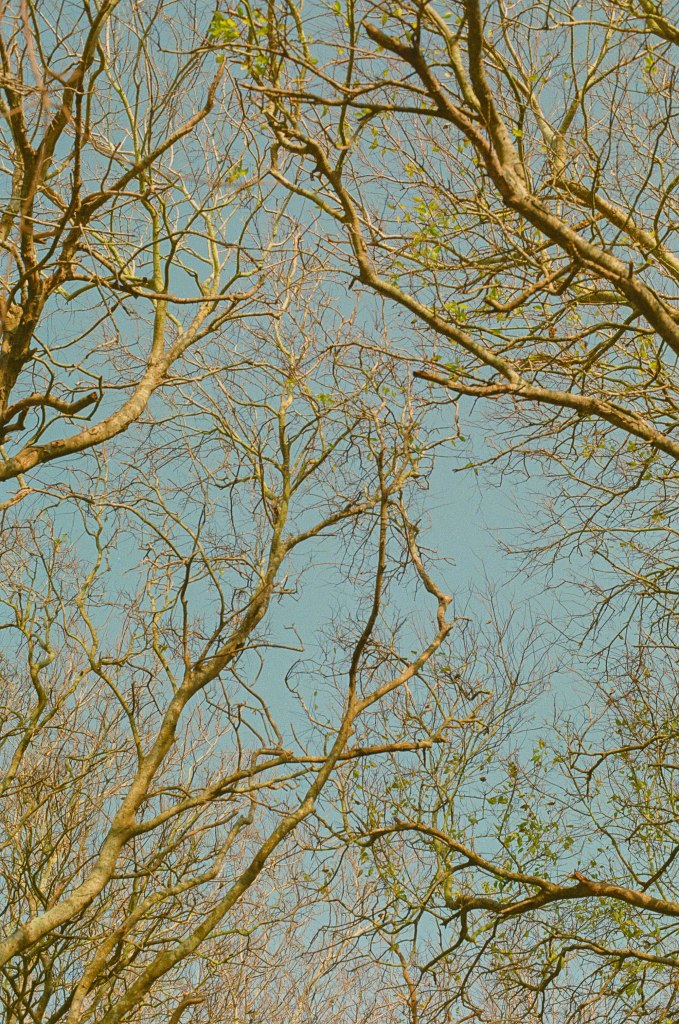
But also I’m just enamored by the trees found throughout it. My favorite, perhaps, being the great leadtrees — found only in South Texas from what I understand — who boast magnificent branches ascending into the sky and display such a vibrant shade of brown that comes out well when photographed (see cover image of post).
While you never fully escape the sound of traffic from the road that runs nearby, as you walk along it does get muffled and your ears begin picking up the subtler sounds of the refuge — unknown creatures rustling through the grass, the wings of birds flapping between the branches, the wavering of leaves as the wind runs free through them. It’s one of my favorite spots simply to focus and do a bit of reflecting, though I learned recently its status as an indigenous burial ground so I’d be remiss not to add that it is very much a sacred space, as well.
I brought along a small notebook. My game plan was this: this first roll would mainly be a trial roll. I’d test my wondering about opening apertures wide in certain lighting situations — jotting down the f-stop and shutter speed for each exposure, following or straying from the Canon’s internal light meter, and essentially comparing the notes I took with the scans I would eventually get back a week or so later. It’s kind of a long, drawn-out process when you think about it, but I figure most learning processes take time.
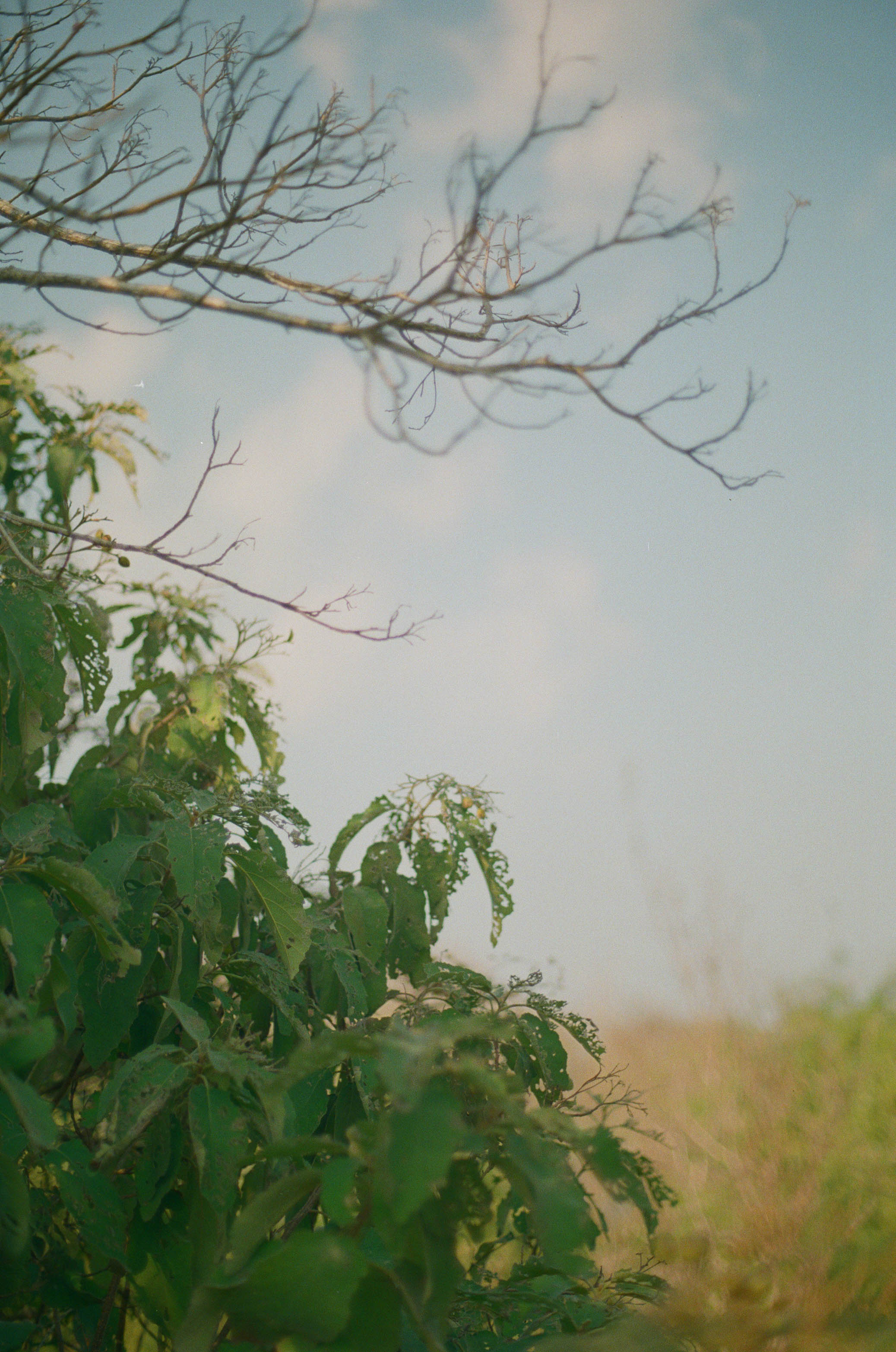
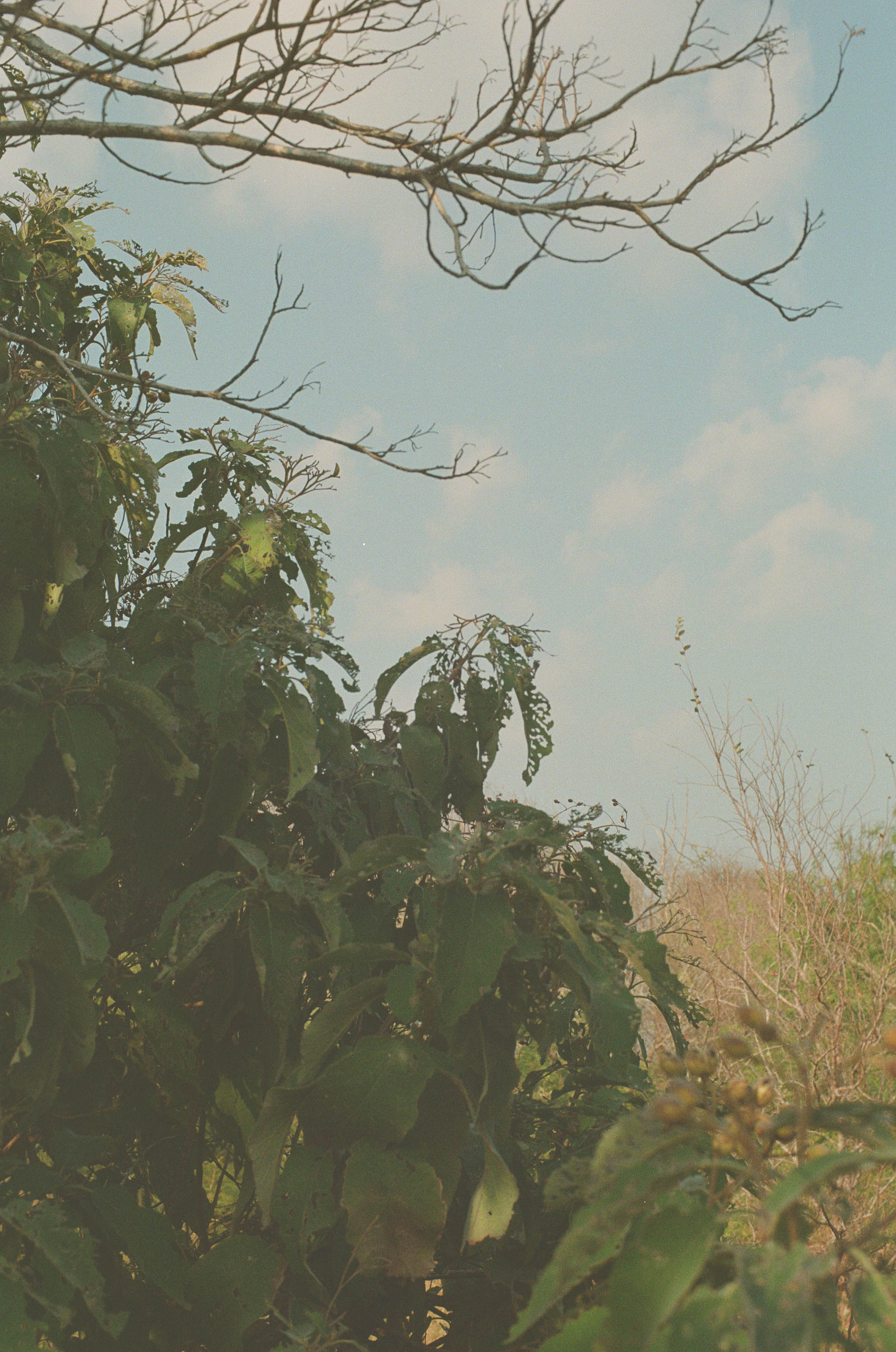
Photo on the right was shot at f9.5, following the meter’s suggestion.
Right off the bat I wanted to test out my thoughts on how shooting at a wide aperture might go over in such sunny conditions. To my surprise, the resulting image (on the left) doesn’t appear as overexposed as I thought it might. I can certainly see the kind of weirdness that resulted with the shallow depth of field that came from shooting wide, but I actually prefer the colors in this shot over the one on the right.
However, I do prefer the overall look of the image on the right. While the leaves in the foreground are strangely darker, I like that you can make out the background details a lot better. The clouds are fluffier, and I do love me some fluffy clouds.
There’s a variety of things I’m thinking about now that I’m looking at these two comparisons. Several of the photos from this roll came out looking a bit darker than I thought, even as I followed the light meter for many of them. I think for this I can either 1) go a bit wider than the suggestion in the meter or 2) try pushing the film instead. I shot with my camera set to the box speed of 400, so in similar conditions I think I might try shooting at 200 instead. This has been a suggestion of many YouTubers I’ve watched, but I wanted to try and see for myself what it looked like going the normal route first.

As I continued along, I noted what my meter read as I shot — sometimes following it, sometimes going a bit wider. I’ll admit, I think there was a kind of adolescent desire to shoot wide even if the meter advised against it simply because I hadn’t ever had a lens with that ability before that point yet.
Another thing I’m keeping in mind now while looking at the scans is that, while shooting wider may not have overexposed to very much detriment, there were instances where I was disregarding where the sun was positioned. I believe that’s what contributed to the darker look to the foreground leaves in the aforementioned comparison photos, as well as this one off to the side.
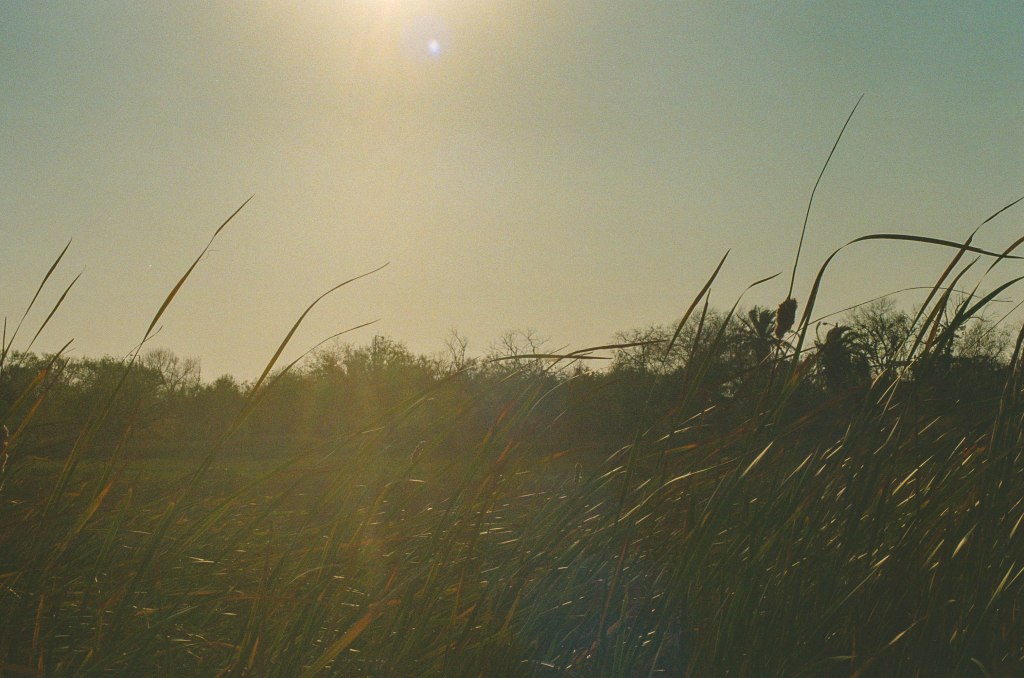
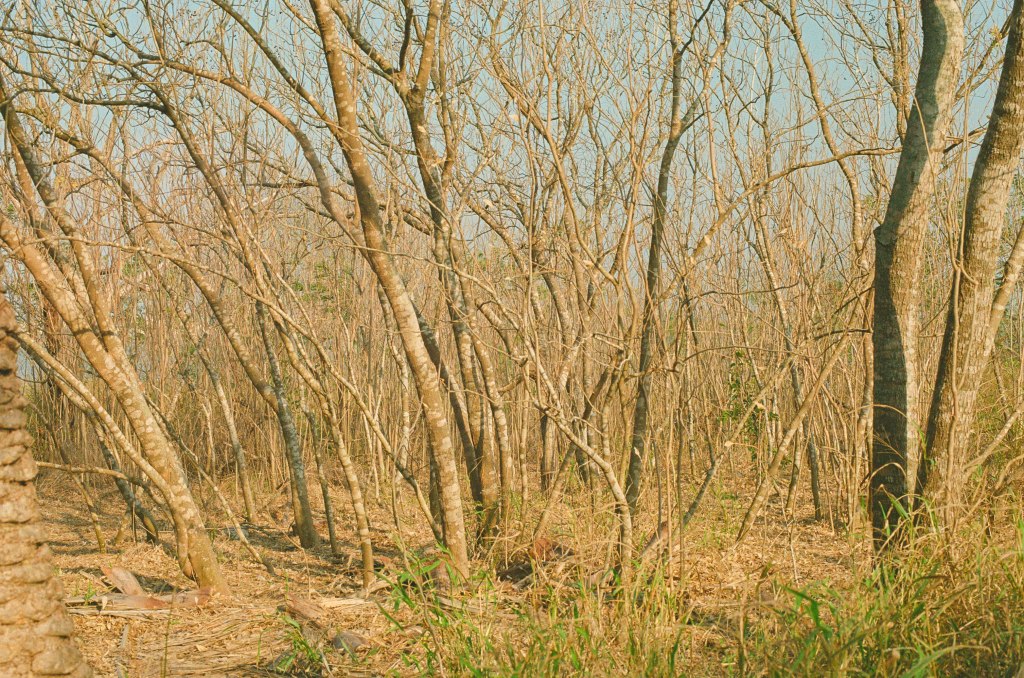
The big thing I was delighted by after seeing the results, however, were the colors that were captured. It’s no secret that one of the aspects that draws photographers to film is the way color is rendered — appealing to that sense in our consciousness that responds with nostalgia. I can only describe the way the palettes in each image are rendered as being rich, capturing both a moment and a memory.
Enjoy some of my favorite shots from this first roll below. All photos developed by Gelatin Labs. Feel free to comment with any feedback, and definitely suggestions. Also, enjoy a short playlist I curated to go along with this post below.
Until next time.