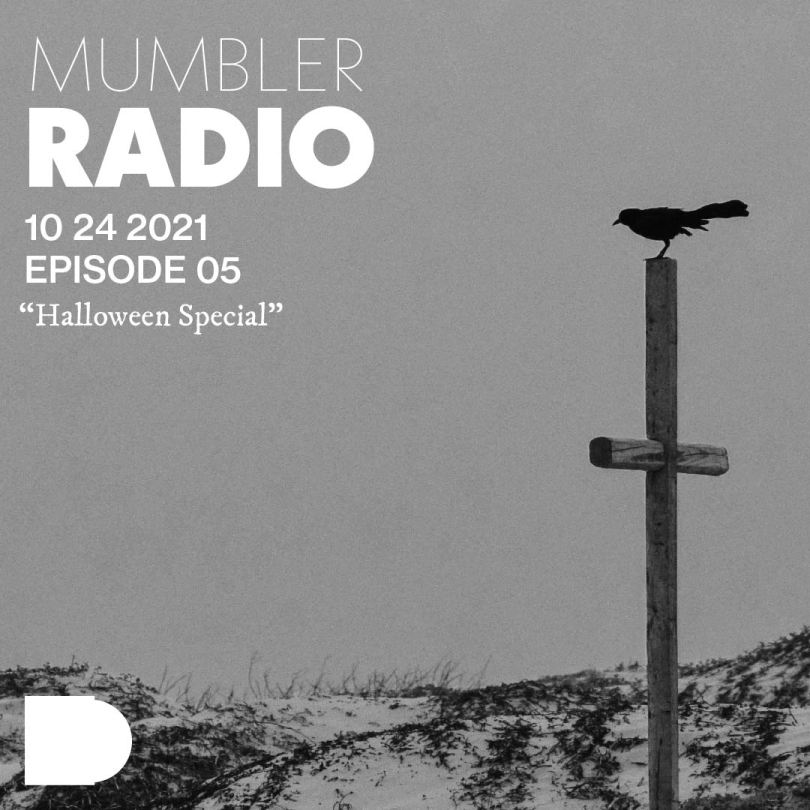
Mumbler Radio Episode #5: “Halloween Special”

Hello friends. Been a minute, eh?

Sorry to any who have enjoyed these little mixes for the long gap since the last one. Sometimes I hit a wall with finding the inspiration to work on personal projects. To be honest, the notion that things in the wider world were once again sliding back into a state of horror itself after a hopeful few months mentally drained me.

But if there is any holiday that’ll inspire me to work on something, it’s definitely Halloween.

As I mention in this episode’s intro, I’ve had a Halloween special like this in mind for some time — even down to what songs I wanted to use and how they would flow into each other. I cribbed most from a playlist I started back some years ago, but a couple are new discoveries — including the closing track. There’s a lot I wanted to include, especially when considering genre representation, but I decided to trim it down and save some for next year.

I mostly wanted to help build a general Halloweeny atmosphere with the mix. Some songs deal explicitly in Halloween themes (vampires, ghosts, and whatnot) while others I mostly included because I feel they add a spooky vibe. Also, I hope y’all enjoy spooky story time at the end. I was pretty pleased with how the sound effects came together. If you want to read the Caller-Times article I mentioned, you can read that here.

Listen to the episode below or check it out on MixCloud here.

Heads up to my local folks — I saw yesterday that the NASA is welcoming one group included in the mix, Twin Tribes, up for a show Nov. 19. I missed them last time they were here so hopefully I can make it out this time (working weekends blows, y’all).

Also a couple of corrections:

  • I accidentally said “Sister of Mercy.” There is, indeed, more than one Sister though I feel the damage to my goth cred is now irreparable.
  • The Temple of Angels S/T EP came out in 2017 — it’s not their 27th nor did it come out in The Year of Our Lord, 27 A.D.

Episode 5 Tracklist

“New West” – Cult of Youth
“Dark Allies” – Light Asylum
“The Silent Choir” – Lebanon Hanover
“Portal to the Void (She Past Away Remix)” – Twin Tribes
“Street of Dreams” – Frankie Rose
“Bloodsucker” – Paralysed Age
“Nightmares” – ANNEX
“La Llorona” – Kid Congo & the Pink Monkey Birds
“Wampiro” – Thee Commons
“Kumbia Zombie” – Kumbia Queers
“Phantom Traveler” – MonsterVision
“In the Room Where You Sleep” – Dead Man’s Bones
“Blood Moon” – Choir Boy
“Spiders In Her Hair” – King Dude
“Клетка (Kletka)” – Molchat Doma
“Lucretia My Reflection” – The Sisters of Mercy
“Lex Talionis” – Temple of Angels
“Halloween” – AFI
“Fog” – Nosaj Thing
“El Pajaro Gigante de Robe” – Los Campeones de Raúl Ruiz

It’s been a minute…

Hello friends, fam, and anyone who has been following along with this blog.

As you may have noticed, there’s been a bit of a lull in posts lately. What you don’t see is there are a couple of drafts sitting in a folder and an episode of Mumbler Radio started in Audition.

Folks who know me well know I can be a little neurotic about projects. If I don’t feel something is coming together, I shelve it until I find the proper motivation. And motivation is something that is often hard to come by.

There is also the fact that things are somewhat better than when I started this. That is to say, this was an outlet I poured myself into when the pandemic was at a very dire point here, and so I opted to channel that stress and anxiety into writing and the show. While we are certainly not totally in the clear, and with a mind towards the parts of the world that are still bearing the brunt of the pandemic, I will say in my own life I’m embracing more a sense of very cautious relief. I feel like the pause the pandemic had forced has let up some, so in my personal life I’m looking to focus more on plans I had intended to pursue before everything stopped.

I’m also looking to embrace more the beautiful things life imparts on us. I’ve spent time with friends and family I hadn’t seen in far too long in recent weeks, and I’m looking forward to doing more of that in coming weeks. I’ve got some trips out of town planned that I’m excited for, in particular.

And of course, all of this revolves around my day job which, like everyone else, dominates the majority of time during the week.

But I do intend to carry on here. I’ll finish those drafts and the episode in due time. Just know that I’m still kind of finding my ground as the world begins opening up.

Thanks always for reading. Talk to you again soon.

– Raul

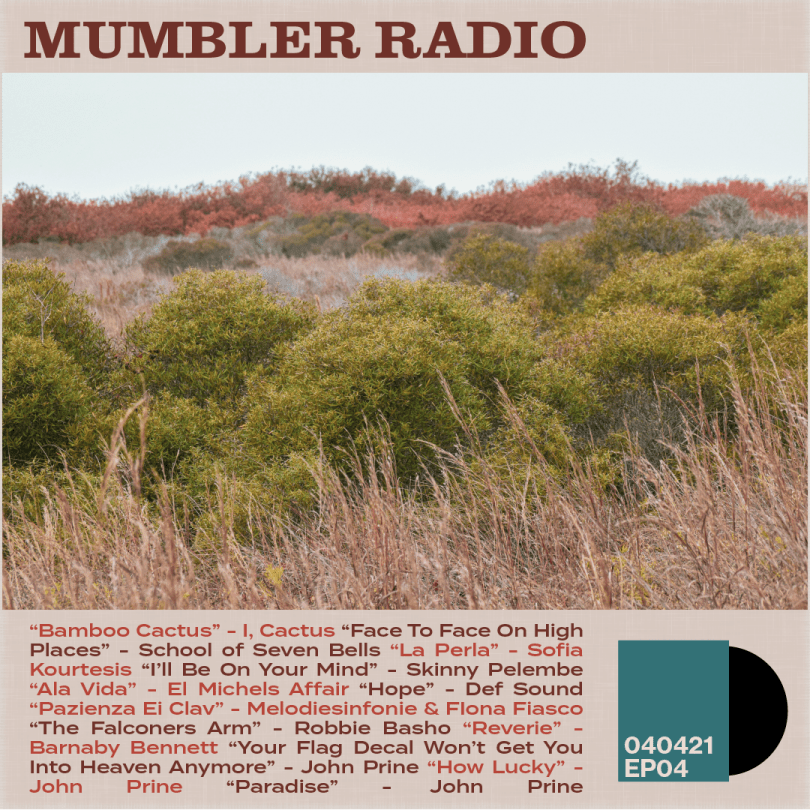
Mumbler Radio Episode #4: “Remembering”

Today is Easter, which is strange because I’ve been aware of it approaching for a while now and it still has yet to sink in that today is a holiday. I suppose as things start approaching a sense of normalcy again the holidays will start to feel more apparent but, for me at least, I still kind of feel in a whole other headspace.

Though, it could also be that I work today. I hesitated dropping this episode today when I realized it was a holiday, but figured I might as well for those of us who aren’t able to spend time with our loved ones and maybe need some tunes to throw on in the background.

Today’s show is frontloaded with more modern electronic sounds before giving way to a more folksy section to close out the show. There is a theme of “remembering” running through a lot of these tracks — encompassed in sound, lyrical content, or even through the nostalgia certain songs trigger in me.

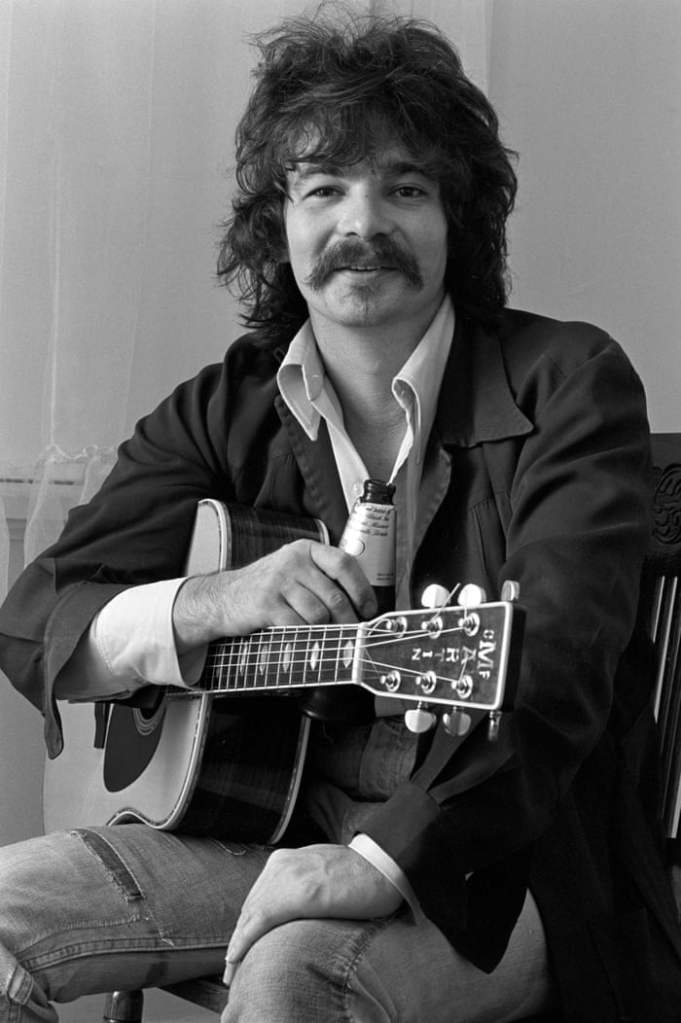
I also spend some time closing out the show remembering the great John Prine, who we lost to COVID-19 a year ago this week. Prine has become a favorite of mine in recent years, someone whose artistry continues to speak to me on a visceral level. I couldn’t think of a better way of closing out the show than celebrating him.

EDIT: After listening to the episode I realized two things: The last two songs sound kinda quieter than the intro song to that section so apologies! You can still listen to them but you might just need to crank it up a bit more. Secondly, I weirdly left out an audio snippet where I credit my friend Sabrina for also getting me into Prine. It may be inferred by the part before that but I would have rather it been said explicitly cuz he really is an artist I love a lot and I’m super thankful for her guidance on even listening to any of these country artists. Guess I had a bit too many of those Topo Chico hard seltzers when I was editing heh.

Listen to the episode below or check it out on MixCloud here.

Episode 4 Tracklist
“Bamboo Cactus” – I, Cactus
“Face To Face On High Places” – School of Seven Bells
“La Perla” – Sofia Kourtesis
“I’ll Be On Your Mind” – Skinny Pelembe
“Ala Vida” – El Michels Affair
“Hope” – Def Sound
“Pazienza Ei Clav” – Melodiesinfonie & Fiona Fiasco
“The Falconer’s Arm” – Robbie Basho
“Reverie”- Barnaby Bennett
“Your Flag Decal Won’t Get You Into Heaven Anymore” – John Prine
“How Lucky” – John Prine
“Paradise” – John Prine

Mumbler Radio Episode #3: “Springtime”

Happy Spring, friends.

If I had to pick a theme for today’s mix, it might be something like “cautious optimism.” There’s a lot of bright, sunny sounds in these selections and it’s certainly inspired by a general good mood I’ve found myself in after such a dreary winter. Don’t worry, though, I still retain a healthy dose of pessimism to keep me grounded.

The change in tone of recent days, though, has made me think a lot of how important it is to take the time that we can to cherish moments of joy. As I mention in this episode, I had kind of envisioned this overall program as being one such moment for others — these episodes alleviating one’s worries, if not just for a short moment in the way that only music can sometimes.

Also, forgive the lateness of this episode, even if it is just a few hours. I’ll be up front I, uhh, maybe dallied a bit more than I should have before I actually started assembling it so running into technical issues compounded more than it should have. But it did get resolved and now, I hope, you enjoy!

Listen below or check it out on Mixcloud here.

Episode 3 Tracklist
“Ladyfingers” – Herb Alpert & the Tijuana Brass Band
“Hiyah Man” – Fimber Bravo
“Shepherd Song” – Keleketla!
“Cumbia Sobre el Mar (El Buho remix)” – Quantic
“I Got Love” – Bobby Oroza
“Suave” – Stephanie Santiago feat. Lianna
“Eso el Amor” – Nico Gomez & His Afro Percussion Inc.
“Above Below” – Eddie Chacon
“Sunflower Dance” – Green-House
“I So Liked Spring (1996 Version)” – Linda Smith

Mumbler Radio Episode #2: “New Suns”

So contrary to what I had guessed, having access to the internet on my laptop again did not, in fact, make planning this new episode easier.

Whereas in that first one I was limited to what I already had downloaded, this one I felt like the options were boundless and, naturally, my mind wanted to include EVERYTHING.

I’m someone who imposes multiple dilemmas on myself when creating something, especially when I set a bar for myself — this time the desire being to really improve on that first episode in every way possible. I also fell into a dilemma of wrestling with whether I should include more of what I really wanted or more of what I thought my imagined audience wanted or would like.

I admit it’s a silly creative slump to fall into, but that’s the way my mind works sometimes.

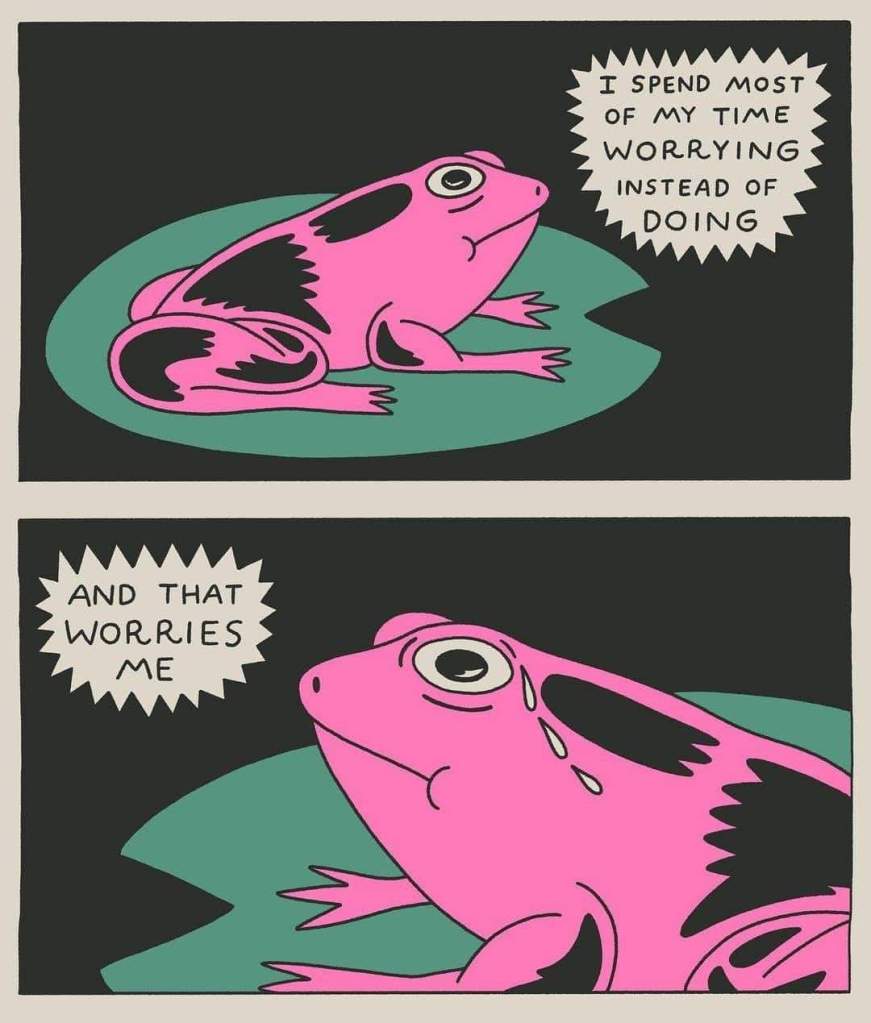
You ever come across a meme that really speaks to you? I came across two amid this process that, honestly, kind of guided me back to approaching this as the fun little side project it was intended to be. I’ve included them at the bottom of this post for anyone else who needs that kind of energy.

Anyways, like a couple nights before I meant to drop this episode I finally got things going and I’m pretty pleased with the result. There’s definitely a heavy jazz vibe this episode, but if that’s not really your thing there are some other gems sprinkled in you might dig.

I spend a bit of time talking about a recent book series some friends and I recently finished — Octavia Butler’s Parable series. Honestly, when planning out this episode I had always known I’d wanted to talk about our experience reading it at the end just because of how much of an impact it had. I’ll go into more detail in an upcoming blog post but I can say for sure that they are books everyone should pick up at least once.

I also hope you all enjoy me going full LeVar Burton introducing that section of the show. Let me know if you think I have a future in audiobook narration. Listen to the episode below or check it out here.

Oh yeah, and I have a new Instagram account for the show. Feel free to give me a follow @mumblerradio. Tell your friends!

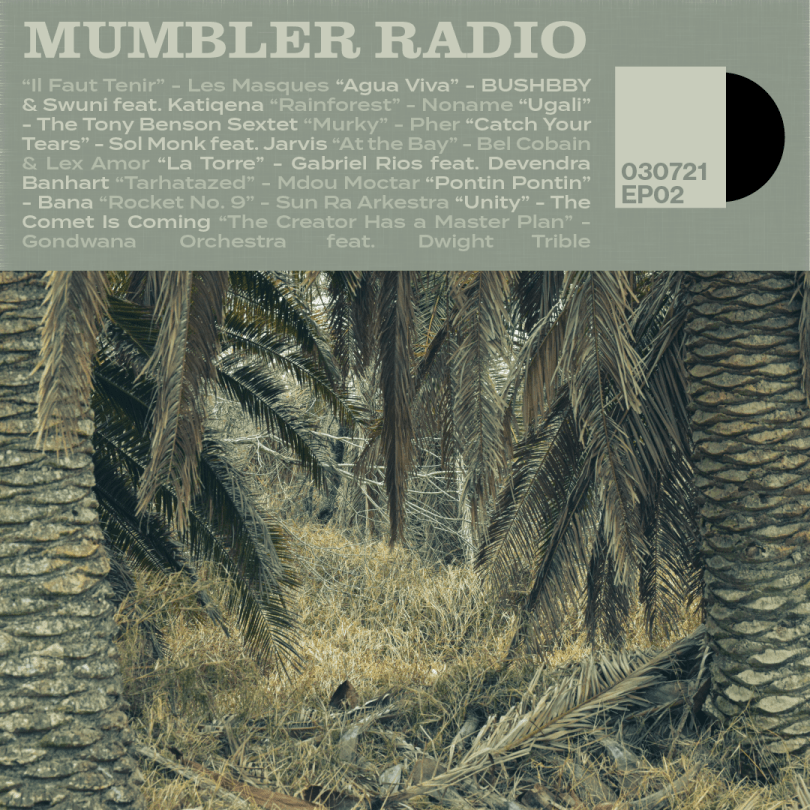
Episode 2 Tracklist
“Il Faut Tenir” – Les Masques
“Agua Viva” – BUSHBBY & Swuni feat. Katiqena
“Rainforest” – Noname
“Ugali” – The Tony Benson Sextet
“Murky” – Pher
“Catch Your Tears” – Sol Monk feat. Jarvis
“At the Bay” – Bel Cobain & Lex Amor
“La Torre” – Gabriel Rios feat. Devendra Banhart
“Tarhatazed” – Mdou Moctar
“Pontin Pontin” – Bana
“Rocket No. 9” – Sun Ra Arkestra
“Unity” – The Comet is Coming
“The Creator Has a Master Plan” – Gondwana Orchestra feat. Dwight Trible

Introducing Mumbler Radio

It’s been quite a week, huh?

I hope you all have gotten through the last few days well and are now enjoying some of the beautiful weather that has finally returned to these parts. Speaking as someone who generally loves winter and prefers cloudy days, I can’t remember the last time I had ever missed the sun or summer so much.

Being stuck at home and without internet for a good chunk of this week, I was able to devote a bit of time to finishing up a project I’d been wanting to do for a long time — a radio show! I want to introduce you all to Mumbler Radio, a platform where I’ll be sharing music and, hopefully, interviews as things pan out.

For years now I’ve been an avid listener of great programs and stations like BLASST, Movimientos, NTS Radio and Worldwide FM, and I’ve long wished to have a program of my own in a similar spirit. I’ve also always loved discovering and sharing music both new and old. This is a program where I’ll do just that — share and talk about tunes I’m listening to at the moment or that I really think more folks ought to listen to. And, as I mentioned, I do hope to feature interviews once I’m better acquainted with how these shows pan out and things are hopefully more in control pandemic-wise.

This first episode is maybe a bit rough. In fact, I wasn’t initially planning on making it the launch episode (hence why I never mention the title) but after being fairly satisfied by the end the result I essentially said “f it”. I’ll have a legit mic for the next one but this one I’m basically recording on my phone so apologies ahead of time for all the plosives. I was also limited to songs I had already downloaded to my laptop, which it turns out was not a lot in this age of streaming. However, this actually made things a bit easier in terms of settling on songs I wanted to share — as well as a fun exercise in making something out of just what I just had on hand.

I’m gonna shoot to release one of these maybe every other Sunday. For now I’ll just be uploading these to Mixcloud but I’ll be exploring what other platforms they might work well on for the future. Check the episode below or check it out on Mixcloud here.

By the way, as I mention in this episode, if you want to donate towards local mutual aid efforts, check the links below. I’ll include the Corpus-centric stuff as well as a great doc to statewide efforts:

Corpus Christi Mutual Aid

Statewide Mutual Aid Networks

Episode 1 Tracklist
“Lady Rain” – Rogér Fakhr
“Pais Nublado” – Helado Negro
“Di Laif” – Colín Ocelado
“Lullaby” – Ibibio Sound Machine
“Paper Trails” – Darkside
“Cashmere” – BADBADNOTGOOD
“Zerzura Theme II” – Ahmoudou Madassane
“Goatfuzz” – Goat
“Cherise Dream” – Temple of Angels
“Sentida” – JESIKA
“Inigradan” – Les Filles de Illighadad

COVID Note #2: The Perfect Host; The Reckoning of American Exceptionalism

I remember when news of the novel coronavirus began popping up, the headlines were like blips on my newsfeed.

The excesses of media saturation make it easy to scroll past even the most dire of predictions. In some ways it has become a survival tactic — a means of preserving one’s mental well-being — to do so. But, as often comes when I do see such headlines, there is a slight knot that forms in my stomach before I banish it into the bottomless void of the newsfeed: “No, no. Things will be fine.”

“Out of sight, out of mind.”

I wrote in my first note how the back-and-forth I witnessed between a stranger and their mother over the phone left a mark on me. The moment, in many ways, foreshadowed what was to come: namely, the struggle between alarm and disbelief in the virus.

My own fragile optimism dissipated quickly in the early days of the pandemic as I began following both the spread and the mortalities that occurred across the world. Even so, there were times I fell back on a fleeting sense of hope that things would right themselves quickly. I looked to Time, as I often do, to be the healer that would shuffle these events into the historical record and, for me, into just another notable memory.

But the moment persisted. It’s been rendered stagnant. As it dragged on I came to reflect on the incompetency surrounding the handling of the pandemic at the governmental level, on the politicization of the virus, and on the ideological barriers that stood in the way of a collective will to overcome it.

The U.S. has never been good at reckoning with its own faults and shortcomings. The mythologization of this country, long the bedrock of U.S. patriotism, is the foundation of American Exceptionalism. This mythology has really foregrounded itself in how I approach understanding the issues that define our times — not so much in understanding the causes of particular issues, but more as the reason for the inability to fully reckon with these issues in the popular imagination. In the case of the pandemic, the American Exceptionalism mythology clouds how we might see ourselves in the midst of a major historical event.

Other places face terrible problems, but not the U.S. Other places endure suffering, but not the U.S. And other places are struck by pandemics and face mass death from the uncontrolled spread of preventable diseases — not the U.S.

The denialism surrounding COVID-19 can almost be chalked up largely to a computational error within the American mind. The reality of the horrors of the pandemic does not square with the foundational myths of American exceptionalism, so they do not compute. It’s not real, or it’s overhyped. It can’t happen here.

Perhaps there is also a tie to assumptions in the mind that the chaos of the pandemic should resemble the ravages seen on the Hollywood screen and not the slow march of death hidden largely from the public eye that the pandemic is. Unless it matches the chaos of the fictional portrayal, it is not Real. The simulacra of the screen steals the assumption of truth from The Real.

This notion of “The Real” dominated my mind at the beginning of the pandemic. It’s a reference to the idea posited by Jacques Lacan and further expanded upon by Slavoj Zizek. My understanding remains fairly pedestrian, but the overarching concept (as I understand it) speaks to me — particularly in the notion of the intrusion of The Real into our Reality.

The Real and Reality are two different things. For me, this means very much a constructed Reality that our consciousness passively slides into — one of images of the perceived order influenced by mythologies and tradition. It’s formed within the parameters of culture. The Real is the natural elements that lay outside that constructed reality, but exist — wild and chaotic — hanging over us or nestled in the spaces near us, making its presence felt but one which our social consciousness is not fully tuned to comprehend.

Is that getting into the weeds enough? I only outline this to say that, to me, the pandemic represents that intrusion of the Real and the denialism that has emerged in reaction is our Reality refusing to square with it.

In the U.S., not only is the notion of Exceptionalism an element of our Reality, but so is the business ontology that informs our understanding of liberty. So much of what constitutes freedom to us is entwined with the notion of a freedom to consume.

Our notion of normalcy is tied to consumption. Our notion of freedom is tied to consumption. “Liberty” does not mean freedom from external threats, the things that reveal themselves from the ashes of unregulated consumption. Our freedom is freedom from those realities.

I can’t think of a more apt lens through which one can view some of the tendencies we have seen amid the anti-lockdown protests. Naturally some of the more fervent tendencies include those that have long derided any notion of governmental overstep, but that perspective became even more potent because the lockdown measures fed into the fevered notions of authoritarian overreach they have long claimed to be warring against. What is disregarded is the notion that lockdown measures are meant to stem the spread of the virus and the battlefield is shifted from the crisis to the ideological war surrounding notions of liberty — one in which the prevailing American understanding, where commercialism and consumption equate freedom, dominates.

This is not to disregard the very real concerns in the economic crises that have emerged from the lockdowns, and the difficulties faced by those unable to work. But this does speak to why the U.S. approach has never been uniform and skirts around ever embracing a strategy that has worked, or at least proven more effective, in other countries (i.e. widened social welfare measures to ensure livelihoods aren’t lost during lockdowns). It’s a half-approach, one that seeks to preserve our notion of normal, i.e. a consumer society, while attempting to control the spread of the virus.

The thing is, this is an attempt at compromise with an entity in which compromise is not possible. Our political leadership hedged their actions on the ability to tie our yearning for normalcy with risk — they bet on us taking risks for a semblance of normalcy, and we obliged. The result of this approach is the situation we now find ourselves — most COVID-19 cases, most deaths, and a spread that seemingly will never be put in check.

This is not to say that the U.S. is the only country struggling to implement concrete measures against the virus while running against consumerist desires, as that ideological torch has been taken up particularly by right wing elements in places like Brazil, the UK, and elsewhere. But I always find it important to focus on the U.S., if not simply for our overarching historical influence on the development of consumerism as we know it now.

I also don’t wish to come off as laying blame on the common individual as a source for why things have gotten as bad as they have. It is, after all, very easy to be frustrated with those who have flouted basic safety precautions and I’m sure I’m not alone in having moments where I shake my head when I see such behavior. But, as with anything, I find it most important to first understand the underlying causes that lead to such behaviors — behaviors couched in ideologies upheld and transmitted from the top-down through systems of power.

This reflex of the state reminds me of another Lacanian/Zizekian concept — the big Other. There’s a relation to the notion of Reality I had outlined earlier. I like to think of the big Other as the arsenal of assumptions about the functions of reality that guides policy. The big Other is the idea of the public that abides by these assumptions and to whom politicians appeal to when making decisions. As Mark Fisher explains in Capitalist Realism: Is There No Alternative?, the Big Other is a “collective fiction”:

“One important dimension of the big Other is that it does not know everything. It is this constitutive ignorance of the big Other that allows public relations to function. Indeed, the big Other could be defined as the consumer of PR and propaganda, the virtual figure which is required to believe even when no individual can. …

Yet the distinction between what the big Other knows, i.e. what is officially accepted, and what is widely known and experienced by actual individuals, is very far from being ‘merely’ emptily formal; it is this discrepancy between the two that allows ‘ordinary’ social reality to function. When the illusion that the big Other did not know can no longer be maintained, the incorporeal fabric holding the system together disintegrates.”

It’s not as if those in power don’t know what it will take to overcome the pandemic — it’s that to do so will be a much deeper admittance that the current social structure is incapable of rapidly overcoming it.

I will stress this rapidly aspect. I am not so cynical to think we will never see an end to this current pandemic — even with the alarmingly erratic vaccine rollout we’ve seen thus far. But this will be an end following a trajectory of hesitance, slow reaction, and the expenditure of lives (and it should be stressed, lives that largely fall along racial/class lines) for the sake of normalcy. That requires more of a moral compromise embedded within a system, one which points to an inhumanity that ought to be rejected if we’re to weather the next pandemic any better.

As the pandemic dragged on and the thoughts I’ve outlined here formed in my mind, I couldn’t shake the notion that the U.S. was in many ways the perfect host for this pandemic. Here was a virus that demanded a collective will to overcome, that dared a population to temper its desires, and that tested the ability of political leadership to respond. It encountered a society in which individualism is stressed, where freedom is entwined with the desires to consume, and with a stripped-down state that wavered at the demand of any centralized response.

It encountered a system that was prepared to simply accept and live with the virus rather than break with the ideological fetters that would upend the notion of normalcy.

Out of sight, out of mind.
Thinking through the riot and our mythologies

There’s a point, I think, where it can be easy to become numb to breaking news.

When wire alerts come out it can certainly force a moment of pause, but I think it’s almost reflexive to immediately carry on with your life.

When a friend messaged me Wednesday about what was happening at the Capitol, my instinct wasn’t necessarily one of concern — my assumption was that it was likely just a ruckus that would largely be confined to the steps of the Capitol building. Little did I know that the next couple of hours I would be glued to the C-SPAN livestream as the rioters pierced all the way into the Senate chambers, forced the evacuation of Congress, and entered into an armed standoff with police.

It was surreal, to say the least. But as I told some friends discussing it, I can’t think of any better way to represent the lid being completely off now.

By that I mean a return to any sense of normalcy within the political mainstream. Not that I really had much faith that was even in the cards — Trumpism will endure because the sense of disaffection towards the political mainstream, and all its professional-class hubris, persists. The ability of Trumpism to at least posture itself as breaking with that standard, despite still shoring up an oligarchical status quo, has long been one of that tendency’s assets.

So it shouldn’t have been surprising to me the extent to which Trump supporters would push back against what they see as an unjust usurpation of their movement despite, as has been said ad nauseum, no evidence showing any election fraud. What better way to push back than to seek retribution against the very decorum of that political-normalcy mainstream?

The reaction against the event itself seems to have taken the position of shoring up that decorum. President-elect Biden charted that course out the gate by parroting the old “this is not who we are” slogan that has become a handy companion for the #Resistance all throughout the Trump era. There’s a lot that can be read into that phrase, but one thing I’ve always taken away is its insistence on foregrounding the image of an idealized America.

The mythology of American Exceptionalism hangs over every event, every narrative, like a phantom. While it certainly can’t be boiled down solely to simple terms, the struggle for political dominance, at least in the realm of the popular imagination, can be seen as a struggle over this mythology. What is the true American tradition, and who is carrying that out?

This has manifested itself in recent years often in reaction to events that pierce the preconceived notions of what is possible. In the last four years alone we’ve had several moments like this which often leads to that “this is not who we are” refrain — beckoning to an idealized U.S. where altruism and noble causes define the spirit of the nation.

Casting aside these notions that stem more from patriotism than a critical reading of history, there is also a tendency to seek refuge in the halls of institutions to shore up one’s opposition. The struggle becomes less for hegemony over the new possibilities that have been erected in the popular imagination and more about who can seize upon the remnants of the old order and trajectories of the past — who can best position themselves as the “adult in the room” to steer the course of history back towards an imagined normalcy.

The powers that be are, of course, all the more happy to capitalize on the fervent surge in sentiment for preserving the mythologized America. This is something that deserves more scrutiny than it will get.

The desires for retributive justice that are foundational to the popular imagination spur the knee-jerk reaction to applaud the state apparatus in meting out punishment to those who dare challenge it. It wouldn’t surprise me that, should the Biden Administration champion a new “domestic terrorism” bill — a second Patriot Act —liberals will be all the more willing to go along, thinking such a law will only be used against their political enemies and not whomever future administrations (or, honestly, even the incoming one) wish to ascribe the “domestic terrorist” label to.

I do understand the tendency to mock those who participated in Wednesdays events. My hands aren’t clean from sharing my fair share of memes among friends (I do love a good meme). When considering the absurdity of the rioter’s perceived demands — not necessarily a revolutionary program but a reactionary one coalesced around keeping a celebrity demagogue in power — it’s frankly easy to laugh off the absurdity of it all. But I’m not so concerned about their reaction so much as I’m concerned around the wider reaction and, especially, the reaction from the Left.

Part of that reaction is also informed by the dominance of the whole “gotcha” culture within online political discourse. With few avenues to stem the right-wing surge within the political mainstream, detractors are all the more ready to settle on pouncing upon the absurdities and character of conservatives. This is entwined, of course, with the nature of social media — the ease with which one can make even the most mundane observations and find virality make this tactic all the more desirable, whether it be fundamentally effective or not. Social media is dominated, after all, by images and phrases so those who can employ the “gotcha” most effectively reap the most interactions.

The residual impact of this tendency for “gotcha” one-ups also feeds into the process of seeking refuge within the institutions of power. The “gotcha” becomes the cheering on of the machinations of the police state, with the connection to Big Tech, in doling out punishment upon those engaged in Wednesday’s riot.

Did the rioters have it coming? Well, of course it should go without saying that their actions would have forced a reaction from the state. But I’m not certain how tightly those who wish to level their own critiques to that state, and especially to the carceral apparatus, ought to hitch their wagons to that train.

My Favorite Tracks of 2020

For someone who enjoys writing about music, my listening has been pretty disorganized this year.

What I mean by that is, whereas in previous years I tried listening to new releases as they came out, this year I spent very little time actually seeking out new music. I missed a lot of the big releases. And that’s not to make a claim to hipsterdom, just a confession of laziness. To quote one of my favorite memes, I was just in “no thoughts, just vibes” mode a majority of the year when it came to keeping up with new music.

But that doesn’t mean I didn’t come across my fair share of new releases this year. At least, I heard enough to compile a couple of lists to share.

Here I’m including a whole Spotify playlist of 50 of my most favorite 2020 songs. You can find the playlist below, but first let me highlight a few standouts:

Emma’s House” – Black Marble, from I Must Be Living Twice: Black Marble’s cover of the Field Mice classic retains the innocent serenity of the English twee band’s sound but strips it down even further, bringing in Black Marble’s more minimalist electronic approach that nonetheless invites feelings of warmth and coziness.

Cumbia del Monte Fuji” – Minyo Crusaders and Frente Cumbiero, from Minyo Cumbiero (From Tokyo to Bogota): I love that this song seemed to take on a life of its own. Sure, perhaps that was propelled partly by the notion of Japanese cumbia as novelty, but the Crusaders absolutely show their chops in the grooving, fiery earworm of a track.

“Te Queria” – Lido Pimienta from Miss Colombia: Miss Colombia is undoubtedly one of my favorite albums this year, and while several stellar singles really helped anchor it, this one in particular was a constant on rotation for me. Showcasing Pimienta’s perfect melding of electronic elements with Colombian music and even some jazz influences, the song is infectiously catchy.

“Hasta la Raíz” – Natalia Lafourcade from Un Canto por Mexico, Vol.1: Yes, I know the song itself has long been one of Lafourcade’s most famous for a few years now, but I’m including this particular version here because I think it’s absolutely amazing. Could that be cheating? Maybe. Either way, reworking the song into a folkloric number with mariachi elements really presents it in a gorgeous, more earthy light. Also, subtracting the effects added in production found in the original, Lafourcade’s vocals sound all the more raw and powerful here. I dare say I prefer this version to the original.

Las inmigratas” – Julián Mayorga and Meridian Brothers from Cuando tengo fiebre veo la cabeza de un leopardo magnífico: Fuck, I don’t know where to start with this one. It’s certainly off-kilter, but totally bewitching in the hypnotic lo-fi cumbia influences married with psychedelic proselytizing-like singing. Totally eerie, but there’s something really interesting going on here.

“Siyabulela” – Asher Gamedze from Dialectic Soul: This has undoubtedly been a year of heightened anxieties. On a personal level, it’s taken a toll. One stressful night this track came up on a playlist I had and, I’ll straight up admit, I shed a few tears. It’s hard to describe — the song almost feels like release or reaching a state of peace following a long struggle. The gentle brass and bass notes cradle angelic vocals and give way to a sax solo that picks things up a bit, but the song never moves beyond the meditative nature. Just absolute bliss.

“Wildfires” – SAULT from Untitled (Black Is): The UK-based R&B outfit has had a banner year with two stellar albums that provided timely commentary on the state of race relations and police brutality. But out of both releases, “Wildfires” was without a doubt the single that I could point to as my overall favorite 2020 track. Hauntingly beautiful vocals boasting lyrics tinged with both pain and defiance, the track feels in many ways an anthem to the tumultuous summer of protests that followed the police murder of George Floyd.

COVID Note #1: Before the Shift

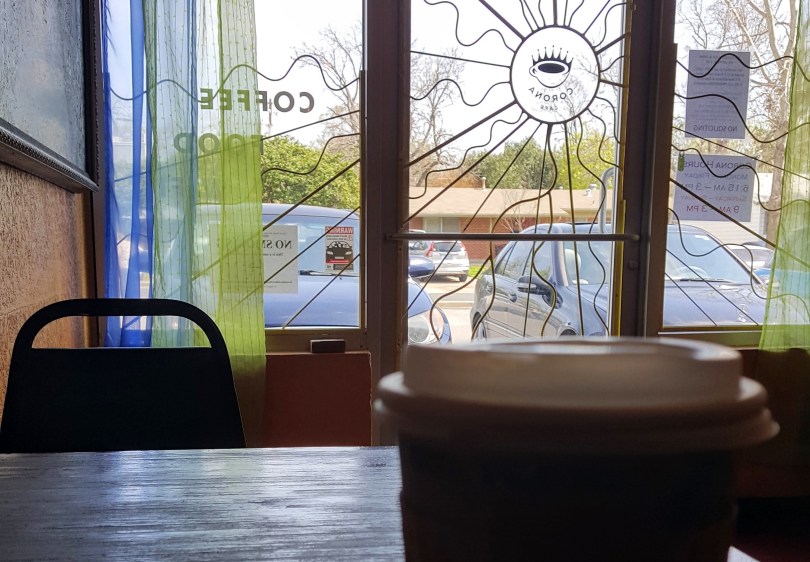
It was on March 12 of this year, as the reality of the pandemic was still settling in, that I found myself sitting in the Corona Cafe on Corona St. in Austin, enjoying a coffee before meeting with friends. The eerie coincidence of that setting was not lost on me then.

By then the NBA had declared the season postponed after players on the Utah Jazz tested positive for the coronavirus, a surreal event that I watched unfold on the television of my motel room the night before. I began seeing “social distancing” appear in the headlines of articles that came across my social media feeds. The notion of widespread use of masks was still not yet an apparent reality.

Sitting there in that café, I still wasn’t certain how things would unfold. I knew that there were maybe a couple dozen known cases in Texas at that time, and maybe a handful in Austin. But my only frame of reference I could rest upon was the H1N1 pandemic in 2009, which I remembered being concerned about but ultimately just resulted in more care when washing my hands and avoiding folks who may be sick. Back then, in essence, life seemed to have changed little and the crisis ended quickly.

I had arrived in town the day before to see a dear friend for her birthday and visit an art exhibit. That night I planned to stop in San Antonio to catch the Kamasi Washington concert at the Aztec Theatre on my way back to Corpus. But as I began reading more news alerts, I started wondering whether it was wise to carry on as normal.

It was then I overheard a phone conversation that first illustrated, to me, the deadly impasse that would define the rest of the year.

A person about my age was talking on the phone with their mother. From what I gathered, the parents were proceeding on a trip to Dallas, one their child was none too keen on given the unfolding news.

“Just be careful,” they pleaded, stressing the seriousness of the virus. Their pleas swirled into an argument as the mother on the other line apparently dismissed concerns. “It’s not fake!,” they replied in exasperation.

After a few minutes of the back-and-forth, the conversation ended. In frustration the person I’d been listening to shoved their phone into their pocket. “It’s all a hoax!,” they shouted sarcastically. “This is all a hoax by the Democrats apparently!”

They buried their face into their hands, wiping the frustration from their face.

Nearly a year later, I still revisit that moment in my mind. Obviously, I don’t know what became of that situation, but I remember it now as the moment the seriousness of pandemic made itself felt to me. Even beyond the strangeness of seeing things unfold on television the night before, I saw how stress was being manifested by the people I encountered in public.

But more than that, the argument itself has embodied the larger impasse on a micro scale — namely the lack of belief in the virus, or its seriousness. I think there are many reasons for this disbelief, but most of all I’ve come to see that trait as simply one aspect that, while not exclusive to the U.S., has led to a situation where the nation is seemingly incapable of getting the virus under control. I say one aspect, because in conjunction with other facets of U.S. culture, it has created the perfect environment for stagnation.

For me, that day marks when the pandemic anxiety that has loomed throughout the year first began to cloud my mind. It’s something I’ve long felt the need to write about.

This is just the first entry in a series of posts that I’m simply calling The COVID Notes. I’ve wrestled with a lot of thoughts throughout this pandemic, several I’ve written down in moments of fear or frustration. Others have squirmed in my mind, never making it onto paper and feeding into feelings of anxiety and despair. I always intended to write on these topics, but never thought of sharing them widely until I began thinking about setting up this blog.

I envision at least four other entries in this series, each dealing with specific topics as they relate to the pandemic: American exceptionalism, mortality, escapism, and on the hopeful — as well as cynical — visions of the future ahead of us. I may have other entries, or I may not. I may post them frequently, or spaced out. This really is open-ended.

I don’t really intend for anything other than to record my thoughts and experiences here. But, as with anything I write on this blog, I hope readers glean something from these entries, as well.

If anything, I hope it prompts folks to reflect on the moment we’re in, and perhaps even share their own experiences.