Where I Want To Be: Strum & Thrum, jangle pop, and nostalgia

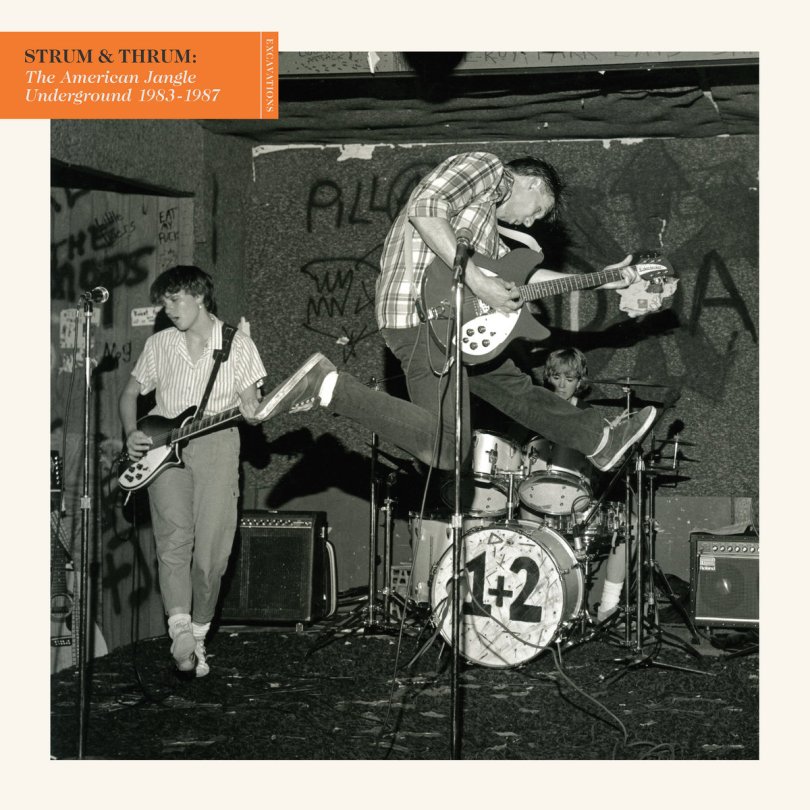
Cover image via Bandcamp.

I’ve long been of the opinion that, of the big grunge bands to come out of the Seattle scene in late 80s and early 90s, Nirvana was — and remains — in a class of their own.

For me, their sound remained significantly unique as opposed to the more hard rock tendencies of the other big grunge acts like Soundgarden or Pearl Jam. I follow observations made by music journalists like Michael Azzerad in attributing this to frontman Kurt Cobain’s long standing embrace and appreciation of pop music. That inspiration, coupled with the foundational roots in hardcore punk, helped Nirvana perfectly bridge the gap between the underground sound and a mainstream audience.

Cobain often made note of some of his favorite bands, which for teen Raul became a vital gateway into the world of alternative music. He of course noted fellow artists that contributed to the grunge scene like Mudhoney and the Melvins, but it was his name-dropping — as well as song covers — of the seemingly-less celebrated twee/jangle pop icons like the Vaselines and Beat Happening that held my attention.

What’s always been interesting to me is that, in that twee and jangle pop sound, I gravitated towards one particular quality — its power to evoke nostalgia. Now, with the release of Strum & Thrum: The American Jangle Underground 1983-1987, Captured Tracks, a label that has built its house upon sonic nostalgia, brings a collection that sheds light on an often-overlooked moment in U.S. music history.

In many ways, the Captured Tracks sound has always owed a debt to music that takes its cues in mirroring sounds from the past, so it makes sense that the label would start at the source for their first release on their new Excavations reissue project. The result is an invaluable examination of a subterranean musical movement that has, until now, largely subsisted in the discount bins of record stores in small towns across the U.S.

The genre itself occupies an interesting area as it pertains to other music movements at the time. While bands in the UK were gaining the sort of traction they’d be hailed for in hindsight, U.S. jangle pop grew with a strong DIY ethos mirrored by the burgeoning hardcore punk scene, but with strong inspiration derived from acts like R.E.M. Indeed, this mesh of influences can be heard throughout Strum & Thrum — there’s the largely arpeggio-driven structure typical of the jangle sound, but tempos and even chords that bear the markings of hardcore make themselves heard on tracks like “I’m in Heaven,” and “She Collides With Me.”

This quality — of a form of punk stripped of its, at the time, more macho/aggro associations — results in a sound that evokes, at least for my 90s kid ears, a sort of idealization of a past steeped in a kind of childlike sincerity. It’s lighthearted but genuine, unique but at the same time familiar.

However, there is a part of me that wonders where this nostalgia and yearning for this past comes from. While listening to this album and attempting to write this entry, an interesting realization came to me. I’ve long attributed my appreciation for this music to a sense of nostalgia, but the question becomes: is it really mine? I didn’t grow up around this music necessarily. Perhaps it was through other media sources from when I was a kid, like television or film, but I’m not certain.

Then I stumbled upon a new (to me) concept recently — sehnsucht. From what I’ve gathered, an aspect of this feeling deals with a sense of nostalgia for a utopian, or perhaps romanticised, vision of the past. I think a lot about nostalgia these days, particularly within the parameters of Mark Fisher’s interpretation of hauntology and the longing for a future that never arrived (though I don’t know if I’m fully on board with his criticism of contemporary retro-inspired media, on-point though some of it is). The result is I often I wonder whether the reactions I feel towards media products that rely on nostalgic capture is either market-generated or sincere.

That’s not to say I didn’t like this album. On the contrary, I absolutely loved it. Even given its late release, it’s probably had more listen-throughs than any other album to come out this year for me. I missed out on the first round of pre-orders and my holiday-frugal mind has me hesitant to throw down for the vinyl repress (FYI, my birthday *is* coming up, friends!).

The thing is, this album is packed with shots of that sehnsucht feeling. You hear it in that short 4-note guitar refrain after the chorus in “Where I Want to Be,” or in the gorgeous angelic vocals of “Pages Turn” that embrace that sort of reverberating, church choir-like chorus often associated with 80s music.

Both tracks are standouts for me. “Where I Want to Be,” a single from Lawrence, Kansas, band Start, I think really defines the album — capturing that wistful playfulness I often associate with twee and jangle pop. It also perfectly encapsulates the DIY foundations that the genre was building upon — lo-fi and imperfect, boasting lyrics capturing simple notions of young romance with undertones of escapism.

“Pages Turn,” a seminal moment in the compilation, seems to carry more the markings of where the genre would evolve — cleaner production, more seemingly anthemic and layered in its verse-chorus-verse structure. The single, from the Barbara Manning-fronted 28th Day, also deals with themes of love but, as if signaling not just growth in sonic maturity, also features lyrics dealing with the desire to move on from a romance who’s time had come to an end. Obviously, as a compilation, there was no direct collaboration between the artists when the songs originally came out for the completed album. But as a manner of arrangement, the placement of “Where I Want to Be” at the beginning and “Pages Turn” later in the middle represents an illustrative way of displaying the trajectory of jangle pop as a whole.

While romance does feature heavily as a theme across tracks, several other songs reckon with a variety of issues tied to the cultural moment the genre was coming of age in. While there is the sort of punk nihilism perhaps seen in the surreal lyrics of tracks like Crippled Pilgrim’s “Black + White” (a minor key refuge in a sea of upbeat offerings), others like Absolute Grey’s “Remorse” delve beautifully into themes of existential longing, the search for meaning, and even suicide.

Those are just a handful of standouts. At 28 tracks, this compilation has a wide offering to delve into. Other standouts include tracks like Bangtails’ “Patron of the Arts” — anchored by the frontman’s ferocious vocals. The Darrows’ “Is It You” showcases the genres close ties to the post-punk sound and a more melancholy sort of approach. And “You and Me,” from The Strand, is just a delightfully bouncy romp with a groovy synth progression that loops you in.

I think the rediscovery of music like this is obviously invaluable — bringing to the surface a cultural moment that had long been overlooked and that tells the story of a scene that managed to carve out its own radical space. The stories of DIY-oriented musical movements, from punk to hip-hop, has always fascinated me with how it emerges both organically and as a reaction to standards in the mainstream.

While I question the nostalgic impulses that might compel consumers towards certain media products today, I do think there is something that can be gleaned from the notion of a collective memory that surrounds a particular sound. While I’m not certain where one necessarily begins and ends with a study like that, the rediscovery of moments like those captured on Strum & Thrum does do a good service in expanding the ground upon which that search can begin.
Scattered thoughts while reading about the Thanksgiving Address

One book I’ve been making my way through during these pandemic months is Robin Wall Kimmerer’s Braiding Sweetgrass: Indigenous Wisdom, Scientific Knowledge, and the Teachings of Plants.

To be honest, it’s maybe a little outside the scope of my typical fare. I can’t remember if I’ve ever read anything that concerned botany and the only book from recent memory I recall reading that foregrounded the indigenous experience was Dee Brown’s Bury My Heart at Wounded Knee, which I tackled a few years ago. What led me to Braiding Sweetgrass I know stemmed partly from my desire to read something outside the rather depressing books I typically trend towards, but also with a hope that I would gain new insight and appreciation for a perspective that seems, at least via descriptions of the book, more inclined towards the natural beauty of the world.

I am admittedly not done with it, having put it down for a couple of months as I picked up new reads. But the format of it — a collection of essays separated into three sections — does lend itself the quality of a book you can walk away from and return to as needed.

I started thinking more of this book as the Thanksgiving holiday loomed. Like so much of the overdue reckoning that has come in recent years in regards to how history is taught and how certain holidays are observed, the indigenous experience as it relates to Thanksgiving has started to get more notice.

I thought about one essay in particular — “Allegiance to Gratitude.” In it, Kimmerer begins by noting her daughter’s early refusal to recite the U.S. Pledge of Allegiance, and from there draws a connection to the Haudenosaunee Thanksgiving Address — a practice similar to a pledge but one, as Kimmerer notes, that encompasses a scope far grander than that limited by the confines of nationalism.

The address, also known as Words That Came Before All Else, essentially invokes a gratitude for the natural world, and the abundance that it provides. But it doesn’t invoke that necessarily as simply a celebration of a bountiful harvest, but rather speaks to a reciprocal relationship between all living things — that of the natural elements but also humanity as part of it.

Today we have gathered and when we look upon the faces around us we see that the cycles of life continue. We have been given the duty to live in balance and harmony with each other and all living things. So now let us bring our minds together as one as we give greetings and thanks to each other as People. Now our minds are one.

The contrast Kimmerer draws throughout the essay with the U.S. Pledge of Allegiance provides, I think, a good example of that between the tangible reality of the material world and the concept of “imagined communities” foundational in abstracting the idea of a “nation.”

We are thankful to our Mother the Earth, for she gives us everything that we need for life. She supports our feet as we walk about upon her. It gives us joy that she still continues to care for us, just as she has from the beginning of time. To our Mother, we send thanksgiving, love, and respect.

I was talking with a dear friend the other day about the weird place I often find myself in regards to tradition, particularly as it relates to holidays. There is a latent pining, I think, for the substantive feeling you often attributed to holidays when you were younger — that they embodied something more than when you get older and it begins to feel more like you’re going through the motions. My typical refrain is to blame consumer culture, though capitalism has of course made it a cottage industry in itself to offer anti-consumerist critiques within the subgenre of “Finding the True Meaning of ________” media products. And at the same, I wonder if I’m simply basing my desires more upon a romanticism of the past, rather than for what the foundations of a holiday have always been.

In the case of the Thanksgiving holiday, the service it provides in obfuscating the U.S. colonial past is already well-noted. What I’m just as interested in is the notion of gratitude it embraces.

Especially in these particularly bleak times, there has hardly been a day that goes by that, in my thoughts, I count myself thankful for things like family, friends, and health. But there is always that latent recognition that the gratitude we express is produced largely by an existence that persists in spite of a system that is designed to make it difficult. To that end, I can’t help but wonder if gratitude itself, when defined within the parameters of a holiday, takes on a commodity form itself — one only amplified by the image-cultivating tendencies of the social media age.

That’s not an attack on the good aspects of this ritualized practice of self-reflection, necessarily. Again, to recognize and be thankful for one’s good fortune is, I think, a key aspect to humility and embracing the things that give life substance. My point is that when it functions to obscure the source of hardship, therein lies the issue.

A good point Kimmerer makes: “You can’t listen to the Thanksgiving Address without feeling wealthy. And, while expressing gratitude seems innocent enough, it is a revolutionary idea. In a consumer society, contentment is a radical proposition. Recognizing abundance rather than scarcity undermines an economy that thrives by creating unmet desires. Gratitude cultivates an ethic of fullness, but the economy needs emptiness. The Thanksgiving Address reminds you that you already have everything you need.”

The absolute kernel of truth here I think is that of the recognition that scarcity is largely artificial as a political concept. That’s not to say there are infinite resources in the world and that we can trend towards a path of unobstructed growth forever, but rather that the earth provides so that all don’t need to live in want — it’s the makeup of society that makes it so that’s not always recognized. This “politics of scarcity” is particularly valuable when utilized by both far-right movements and neoliberal pushes for austerity operating on the notion that there is not enough to go around and playing people against each other based upon that idea.

The only point I might differ is on the notion of “contentment as a radical act.” I do get the point being made here, of valuing the true substantive aspects of life over those needs cultivated by consumer culture. However, I might say the more radical act would be to push for contentment on a mass scale — to actually ensure that the earth that does provide enough when allocated equitably does, indeed, meet the base needs of all.

But I think this is one reason I was drawn to this essay. Kimmerer wonders throughout how different society might look if something like the Thanksgiving Address were to replace pledges across the world — creating societies founded upon a gratitude for the earth and cultivating a “democracy of species.” I’ve long embraced a language similar to this when reckoning with my own personal politics, and I certainly feel that the Left ought not to shy from accusations of utopianism when presenting the ideal of the future.

I think these inclinations are often so easily dismissed because of how capitalism uses them in, as I mentioned before, its own performative anti-consumerist media (see, Avatar). But I always feel that the best place one can position oneself is that place where you can recognize the true aspects of an idea while understanding how it’s being taken advantage of and watered-down.

To that end, perhaps something like the Thanksgiving Address ought to become more standard practice, as Kimmerer suggests. Not simply as a means of expressing gratitude, but also one where that gratitude highlights the reciprocal, and communal, relationship with the natural world and each other.

Welcome to Mumbler

Hello all,

Starting this blog has been in the back of my mind for some time now.

I often find myself thinking back to the days where I would pen articles and reviews just about things I was interested in with abandon — sharing them with friends, family, or whoever cared to read them. Over the last few years, I think something happened.

I recently read something from a writer who has become one of my favorites, Mark Fisher, on the experiences that prompted him to start his renowned blog, k-punk. He was describing his experience in academia where there was a sense of expectation that you couldn’t write on a particular subject unless you’d read absolutely every single book, article, or any other tract on it. For him, the blog became a more liberating outlet where he could express himself and write on the things he was interested in without restrictive parameters.

That’s not to say that it isn’t important to know what you’re talking about when writing. I think it’s fairly clear at this point that one aspect of the “fake news” proliferation includes those who write either maliciously or in a willfully ignorant manner on their subjects as a means of obscuring reality. However, I felt the point Fisher was making spoke to a sort of truth that had been gnawing at me, one that fed more on self doubt over one’s abilities rather than one’s perceived credentials. Obviously I’m not in academia, but that sort of endless research drive into a subject before even beginning to type a word has been the death of so many articles I’ve dreamt up over the years.

So I’m kicking off this blog in the spirit of re-fostering the love of writing that I once enjoyed. I can’t say for sure all I will cover here, but I can certainly envision it consisting of the personal and the political, the cultural and the speculative. I hope to continue writing on my favorite music and films as I have on past platforms, as well as offer commentary on current events as I feel inclined. It’ll be a grab bag of sorts — some serious, some lighthearted.

On the choice of name — Mumbler. I’m not sure if I’m going to keep this title. I came up with it some years ago (I told you this has been on my mind for some time!) so it has always been kind of a placeholder whenever I attempted to actually start working on this. But rather than put it off any longer, I’m using it for now. The name is inspired by the one critique I’ve always endured when speaking — that I mumble. Given that, I thought it’d be kind of a funny contrast when putting together a platform where I would be sharing my thoughts clear, unimpeded, and without filter. Also, I guess there is an evocation of the popular blogging platform Tumblr there.

That’s all for now. While I’m thinking of this as being an exercise largely for my own benefit, I do hope folks enjoy reading and following along. I have no real road map, schedule, or end goal for this other than chronicling and sharing. But if I’m able to reach an audience and deliver something positive or prompt some sort of reflection, then that would certainly be a plus.

Until the next entry. Take care, all.

Raul