
Let’s get this outta the way first: Yes, I know I’m writing a holidays blog post during Spring Break.
Suffice to say, it’s been a busy year already. Busy, but also exciting.
I’d been meaning to sit down and update this blog with a new installment, though, and it seems I’m in one of those lulls where my body is finally forcing me to slow down — i.e., I’m currently on the mend from a nasty sinus infection. So what better time to catch up on some writing?
As you may have gathered from the title, I made my way down to Corpus for the holidays — outrunning a bitter arctic front that made for an interesting contrast between 30°F Austin and 60°F sunny Corpus by the time I rolled in. Of course, the front caught up with me eventually but what better way to combat the cold with the warm feelings of being around family and friends for the holidays and my birthday?
OK, that was purposely corny because it was indeed cold af for a good chunk of the trip. Nonetheless, I was still able to make some time to do a bit of shooting. And fair warning, I worked with a bit of new stuff this trip so this is a bit of a longer entry.
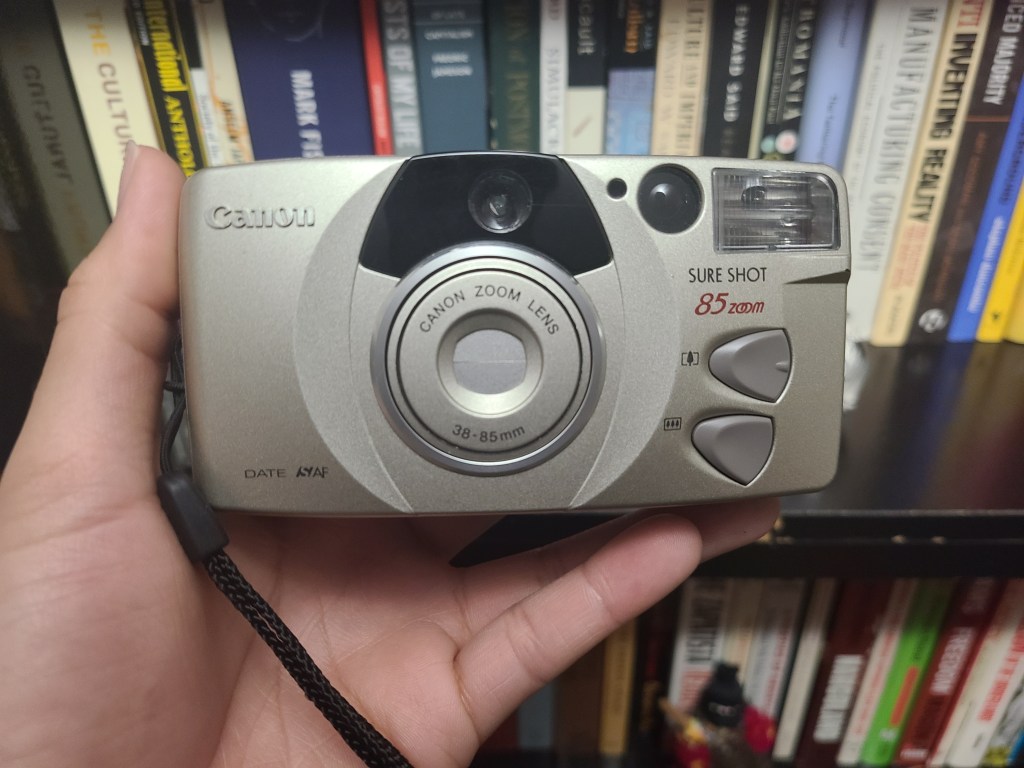
In tow with me was the trusty Canon A-1 and a nifty new addition to the team — a Canon Sure Shot 85 Zoom point-and-shoot gifted to me by the ever-generous film guru, Luis (@luisesoteric). I’d been in the market for a good point-and-shoot for a while for when I want something compact to carry around, and this little piece seemed poised to fill that role nicely.
I had actually loaded it already with some Kodak Ultramax 400 while in Austin and did some shooting before heading down, so I’d say I was about halfway through the roll at least before I got to Corpus. But in the Canon A-1, I had something I’d been excited to try out for a good while now — CineStill 800T.
Some CineStill night shooting
CineStill is quite well-regarded among the film photography community from what I’ve gathered, I think partly because they’re one of the few major entities still releasing new stocks. But if I were to guess, I’d say the 800T is their bread and butter — the first they released and one that really shines in the night photography shooting that I think this particular stock is prized for.
That’s partly because, aside from being an 800 ISO film and thus better suited for low light situations, it’s also known for producing “halations,” or these distinct glows around tungsten light sources in images. The reason is because CineStill is repurposed motion picture film in which a layer is removed to make it possible to develop in the typical chemicals used for film photography — it’s that layer that would usually protect against the halation effect. For a better, or maybe funnier, explanation, here’s a rundown from my favorite film photography YouTuber.
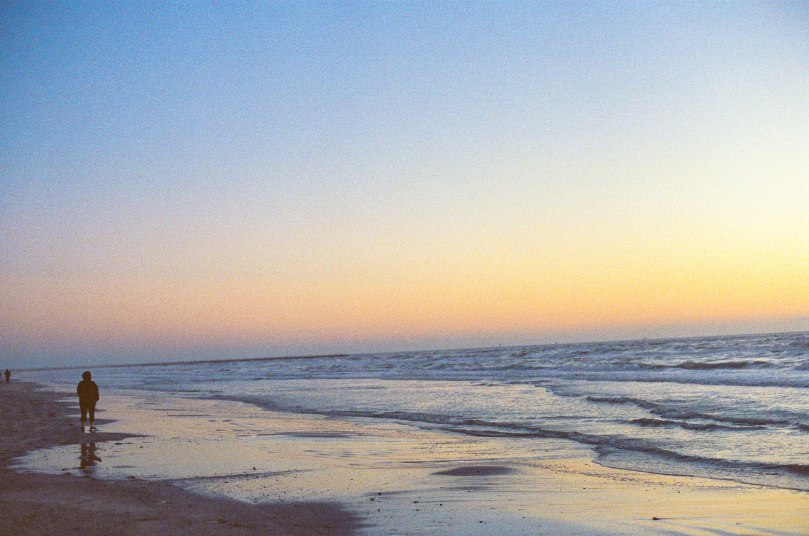
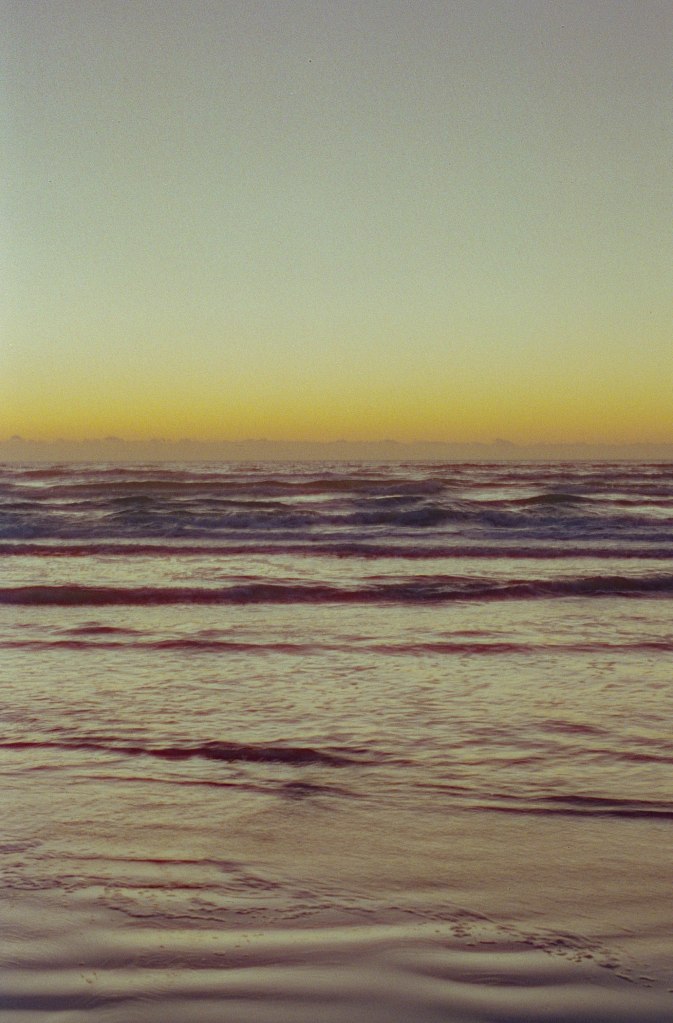
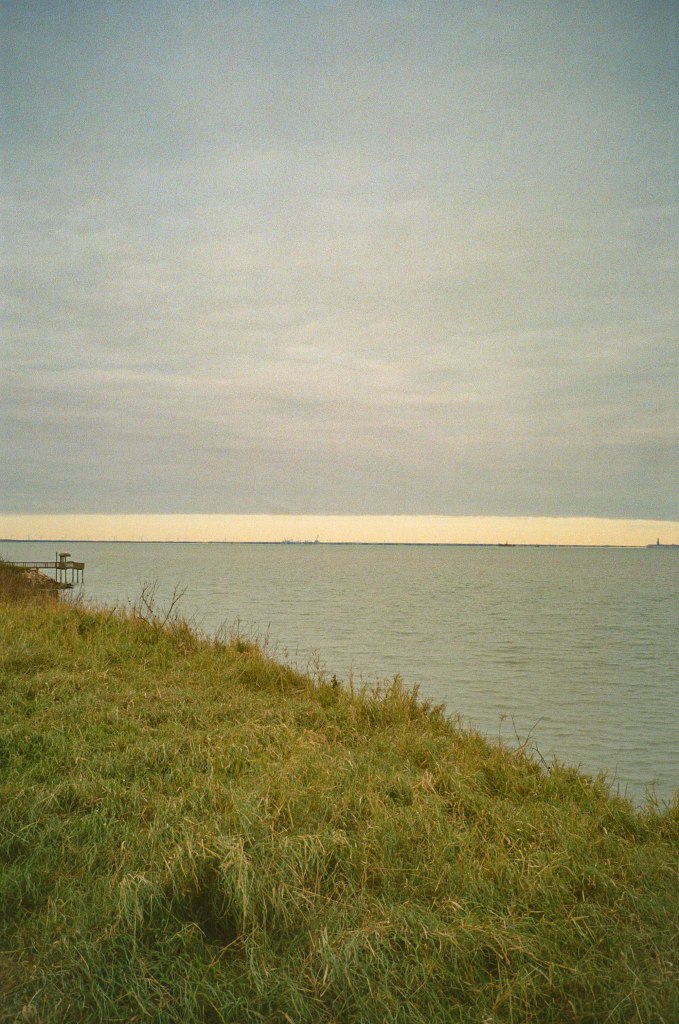
I had planned on hitting up Luis to do some night shooting while I was in town but my first few shots with the stock actually came when I went with my mom to watch the sunrise on the beach — one of her favorite activities and one I’m always happy to share (when I can wake up in time).
In my very half-baked thinking I figured that early morning hour of sunrise was the kind of low light setting a high-speed film like CineStill would excel in. I thought perhaps I’d get something akin to another Corpus shooter whose work I’ve come to admire, analog_angell. Something dreamy, something nostalgic.

If you’ve never watched the sunrise on the beach, it really does possess in it all the wonder that you might imagine. It’s special — the crash of the waves accentuated by the quiet of the early morning, the mix of warm colors that splashes and saturates the sky as it chases away the pre-dawn blues. When looking at it from a photography standpoint, it’s actually quite difficult to capture in an image the beauty of the moment itself.
I was quite pleased, however, with how the stock rendered things. I noticed grain was particularly prevalent, and as I type this I remember one other detail — I was actually pushing this film. CineStill 800T, as the name suggests, is typically shot at 800 ISO. But I decided to push it for my first outing with it, shooting instead at 1600 ISO in the hopes that’d I’d be given even more flexibility in low light situations.
But one effect from pushing film, is you get more grain. But honestly, I really kind of dig the grain in these images. I thought it really captured that “dreamy nostalgia” feeling I mentioned above, as if the image is of a place that exists only in a distant memory.
And besides, what film photographer doesn’t like a bit of grain?
—
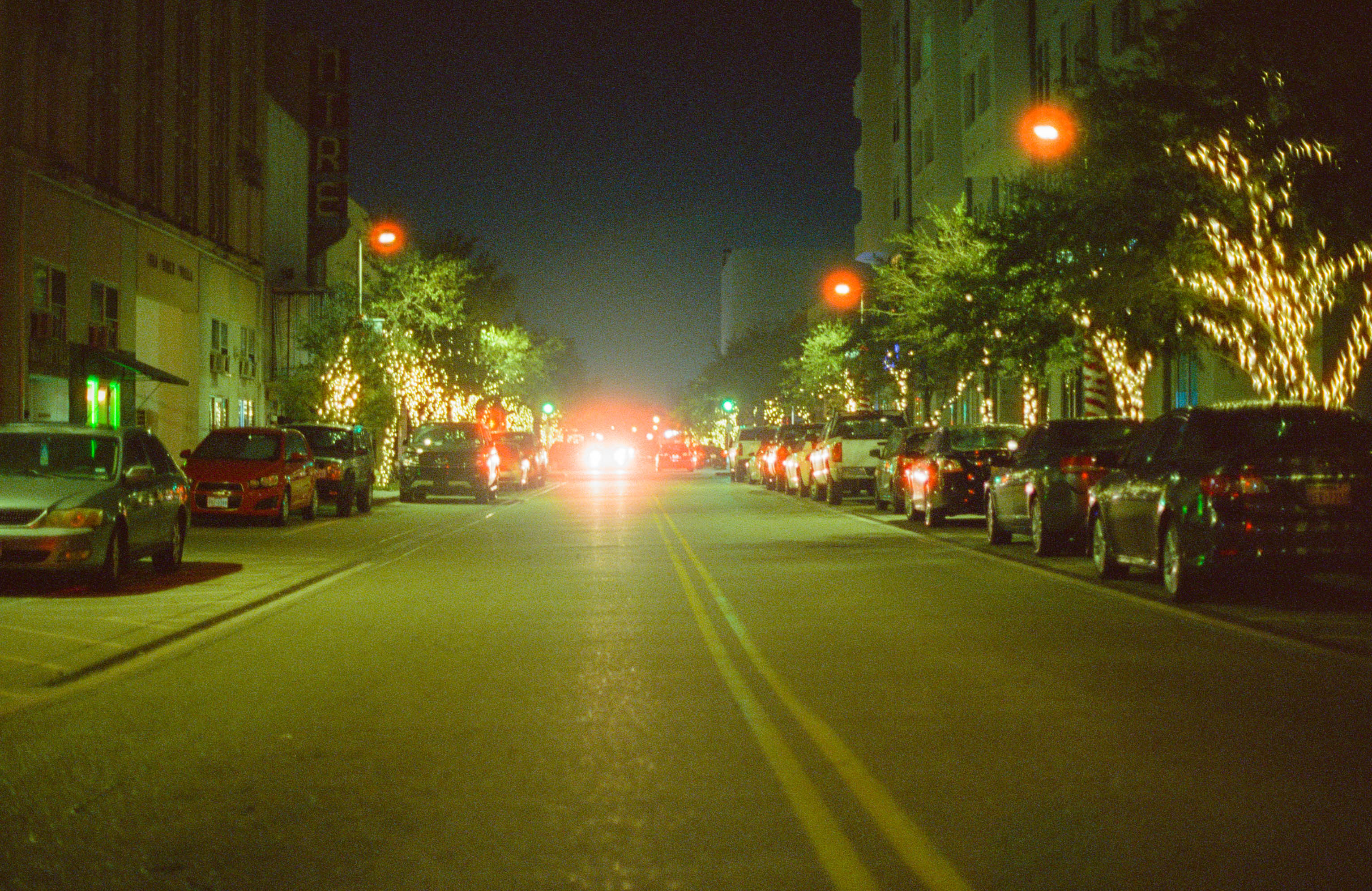
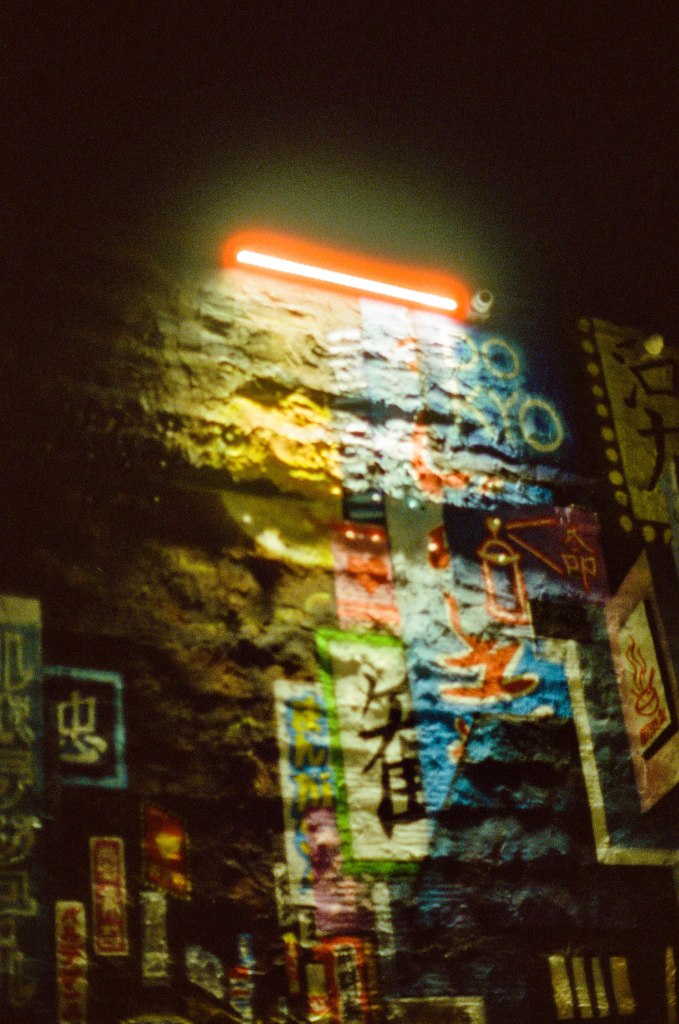
Eventually, I did meet up with Luis to do some night shooting in downtown Corpus.
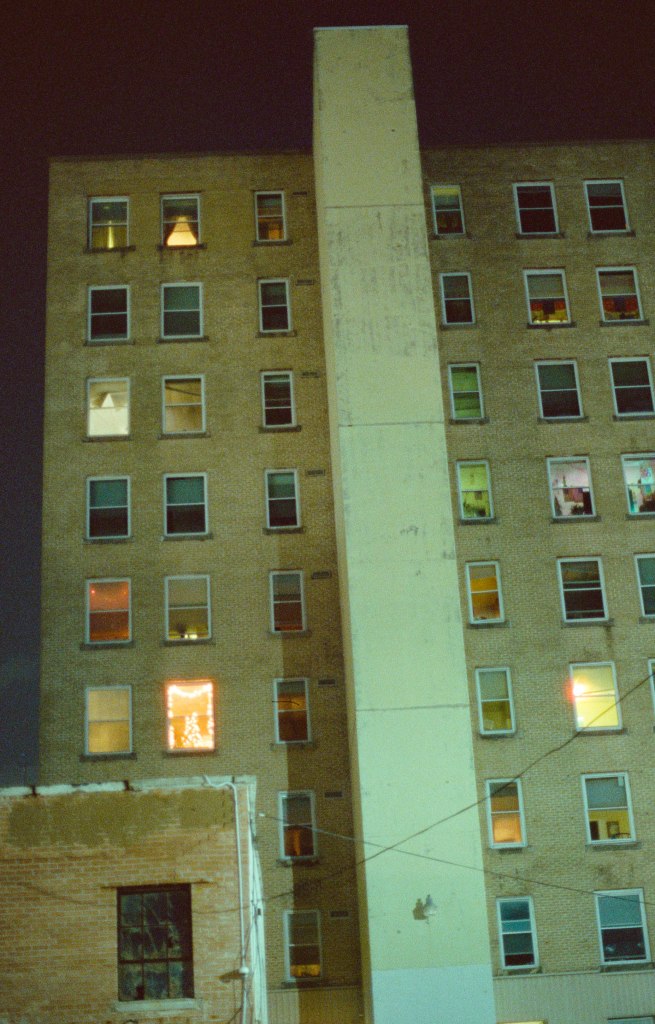
Being the holidays, I think what I was most excited for was to see how CineStill rendered all the holiday lights. But even outside that, the nice thing about downtown Corpus is it’s not really busy most nights, especially on the weeknight we went. So worries about standing out as an oddball going around shooting random stuff is a bit lessened.
I think one thing about photography that I’ve come to say more often is that I appreciate its ability to take you places. I can’t think of another hobby I’ve had that has ever motivated me as much to just go out and explore — to look at the world around me in a different way. It beckons you to wander.
That said, we may have wandered a bit too much. I still have the marking of one blister I got from my boots as we walked for blocks, guided largely by our whims.
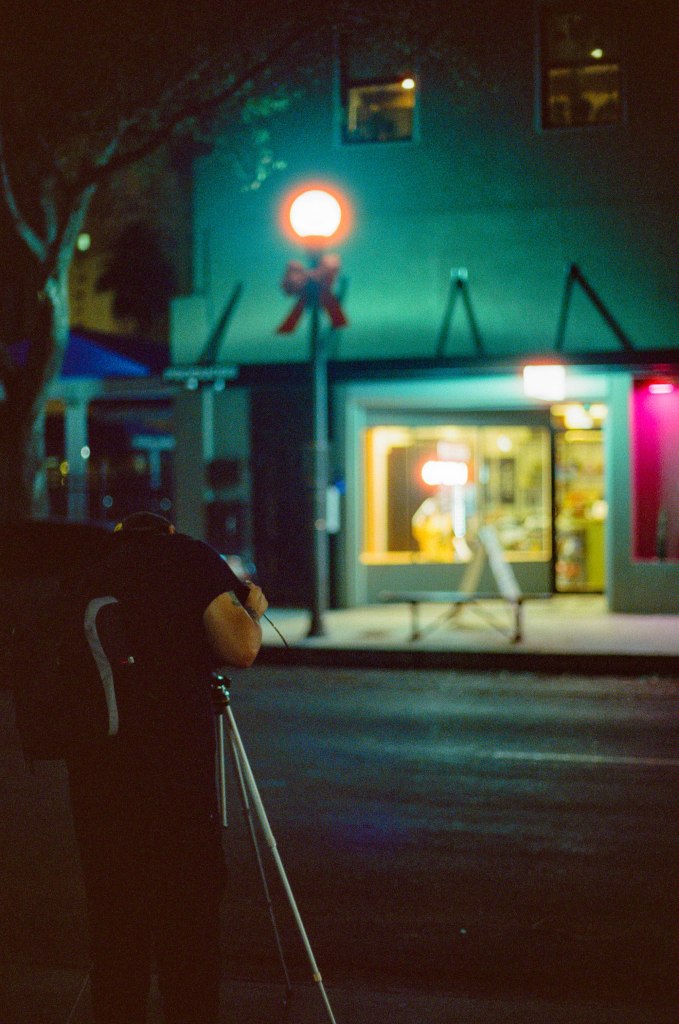
When it comes to photos, however, I was a little disappointed with what I got. I think this stems largely from my ability, however, and especially from the fact I was shooting handheld. Night shooting is often aided by tripods, giving your camera stability so you don’t have to worry about the slightest shake ruining your shot — something that your image can be especially sensitive to the less light there is.
I have a tripod, but I was kind of stubborn and left it at home thinking I’d be OK without it. Luis had the right idea, rolling with a Mamiya C330 and a tripod. I highly recommend checking out some of his shots following the link I placed to his Instagram page earlier in this post.
However, despite lackluster results on my part, it was a really fun outing. I’d been craving that kind of film walk for a long time. Sometimes just wandering around, finding scenes in the world around you with a friend as passionate about this stuff as you are can be a thrill.
Also, I’m not at all discouraged to shoot CineStill again. In fact, I’m all the more looking forward to it. I have a roll sitting in my fridge right now, fully anticipating the next time I can make an outing with it. I know the kind of results the stock can get and I fully want to try making some great art with it in my own right.
And this is a bit of a tangent, but I was further reinvigorated after having seen Wong Kar-wai’s great 1995 film Fallen Angels for the first time recently. I won’t get into the plot of it, but it is set almost entirely at night in Hong Kong and the cinematography is just fantastic — so much so I went almost immediately down a rabbit hole after watching it to find out what kind of lens they used during filming. It was just a cinematic feast of beautiful night shooting, painted in all the neon lights you might imagine and masterfully centering the sense of big-city isolation that isn’t always easy to pull off visually.
So, yeah, there’s a little unsolicited movie recommendation for you.
Sure Shot and reminiscing in San Diego
As I mentioned, I also had a new camera in tow for this trip — a handy point-and-shoot I was excited to test out.
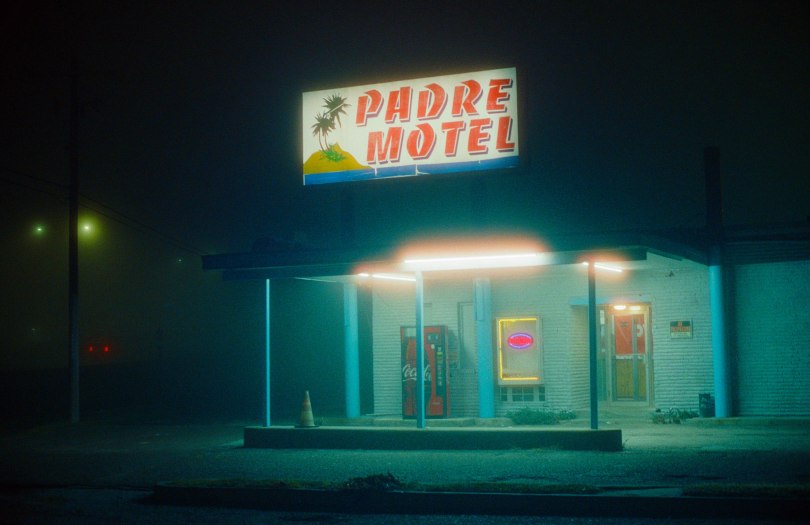
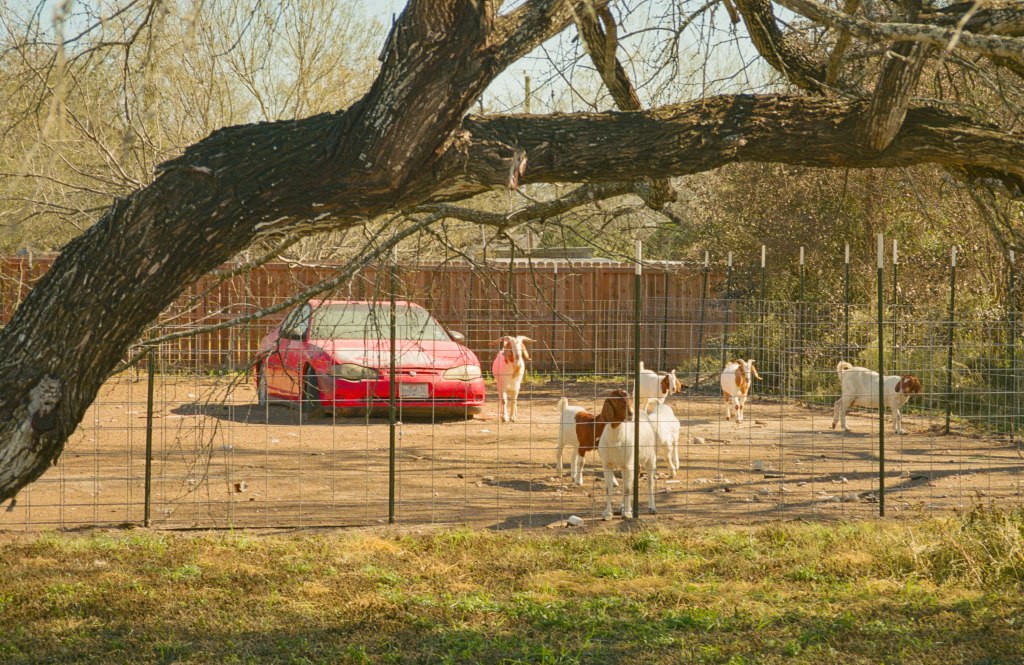
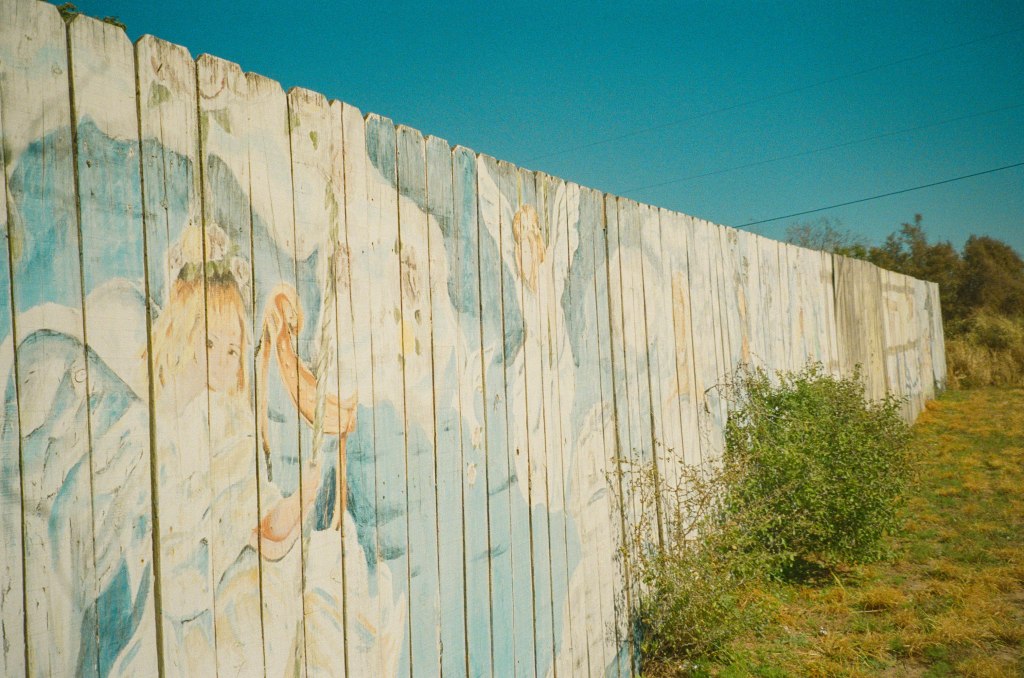
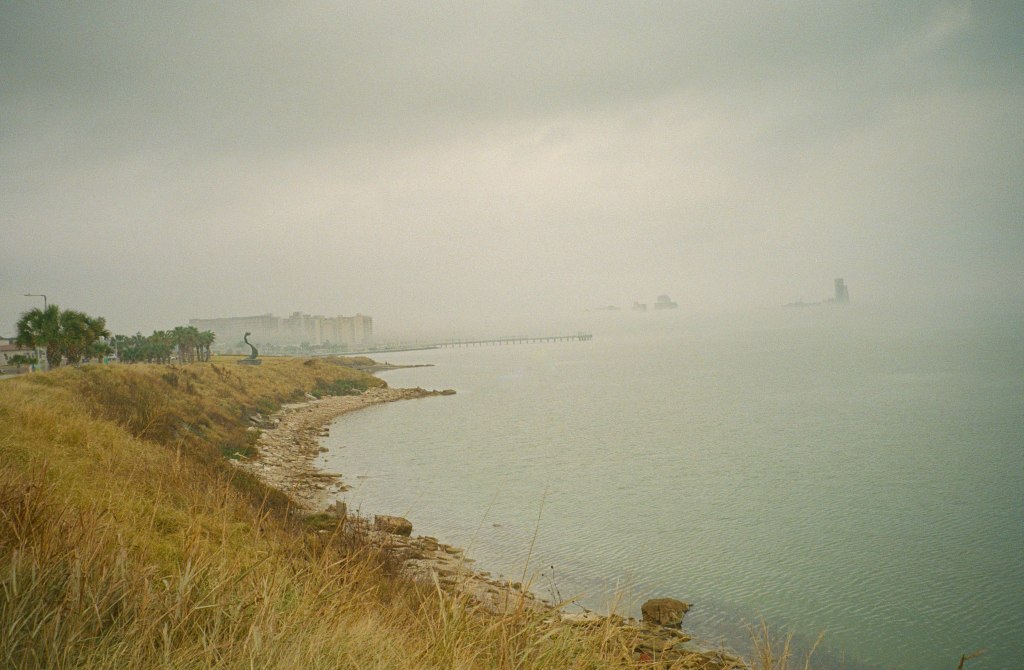
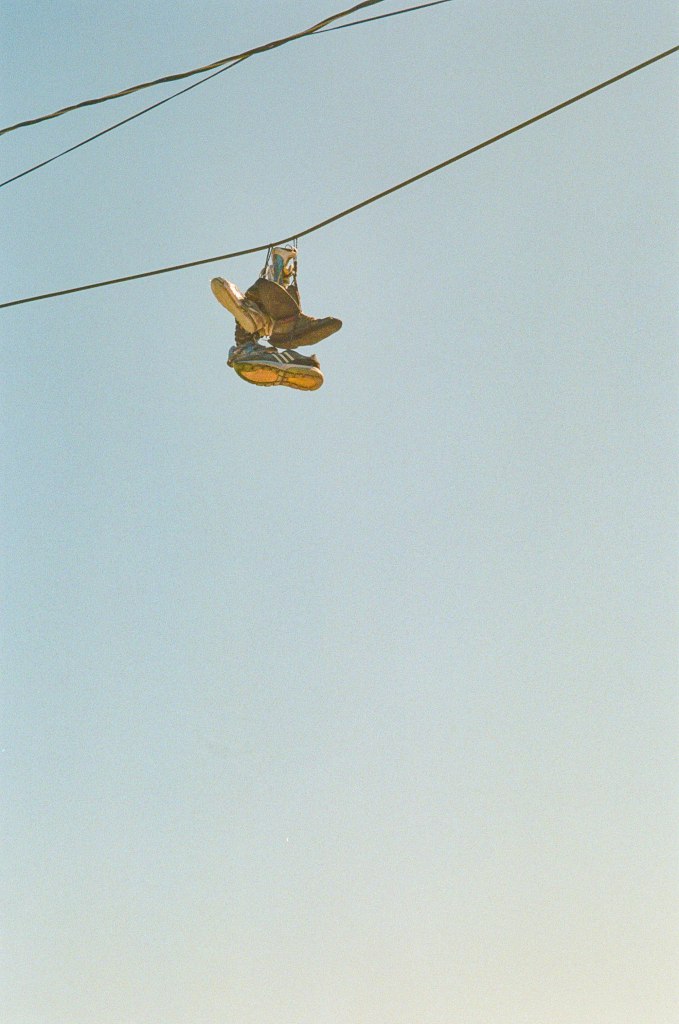
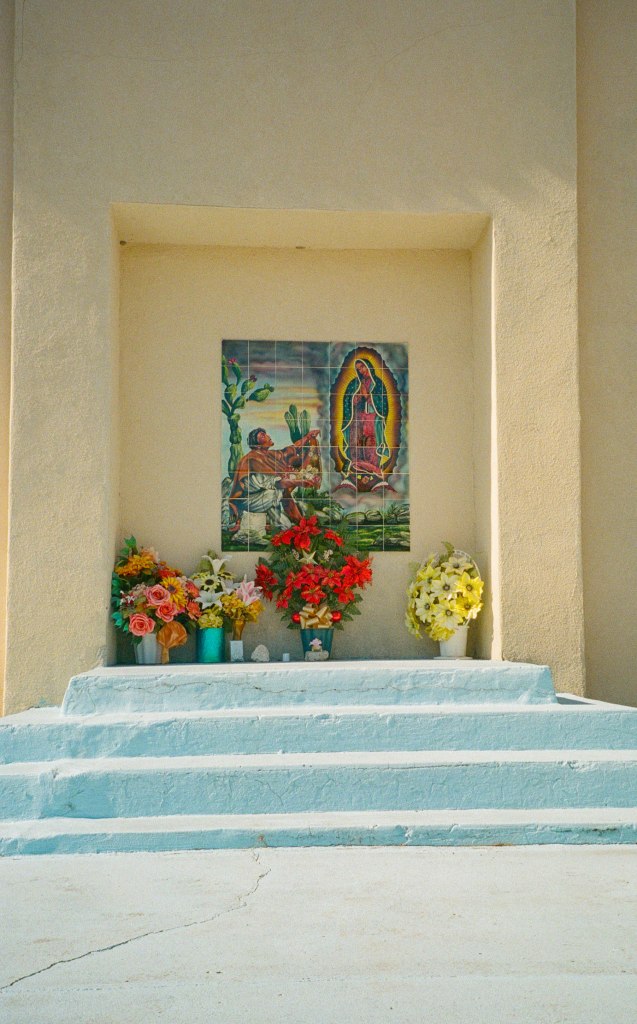
While I’d gotten some shots in Austin on a hiking trip with friends and then a few of the downtown Corpus skyline during an eerie fog, the majority of images that I ended up loving from this roll came from a trip I took with my mom to San Diego, TX.
San Diego is a town that for whatever reason has always stirred up various emotions for me. My family’s roots are in rural South Texas — Robstown, Banquete, and San Diego — and so I think part of it is just those innate memories that come back to me when I visit these towns that themselves often feel locked in time. I think of family gatherings and barbecues, of gathering mesquite pods and pretending they’re worms, of the sounds of roosters crowing down the street or the freight train passing at a distance. A trip out to these towns is almost always like reopening a photo album in my mind.
I also have family buried here — namely my grandmother and grandfather as well as a tía and now, a tío. I was visiting my tío’s resting place for the first time since he’d passed in August. So suffice to say, it was partly a solemn trip.

But after paying our respects, my mom and I decided to drive around town a bit.
As it is in small towns the world over, San Diego has kept much of its history intact. We saw so many old buildings as we wondered to ourselves the history behind them. In fact, I’ve made a mental note to go back one of these days explicitly to walk the town and do some shooting.
After a bit of driving around we stopped at a ranch headed out of town that belonged to my mother’s cousin — one I would readily say I’ve never been to and yet there was a bit of familiarity to it. Perhaps that was owed more to the array of antiques and vintage decor that lined the walls. Much like the town, it almost seemed like a space frozen in time itself.
While conversation remained solemn and centered on the losses we’ve seen in recent months, the mournful tone was nonetheless one of reminiscing, as well.
I’m glad my mom took me on all these detours around town.
I think I always appreciate trips like this because, in some ways, it reminds me of where I come from. Adulthood has often felt so much like adjusting to new situations and settings that I don’t always feel I fit easily into — that ever-present “imposter syndrome” we all are probably familiar with in one way or another. So trips like these remind me that my roots come from places seeped in their own richness and authenticity, and there’s a comfort in knowing that inner foundation can’t be taken away.
—
In all that reminiscing I almost forgot to talk about the camera, but honestly there really isn’t too much to report on it. The thing with point-and-shoots is that there really isn’t much control you have on it — no manual mode or anything. You literally just point, and shoot.
So with that, I was really just looking for a camera that did that well. I’d had one Kodak point-and-shoot that was actually the first camera I’d purchased when I picked up this hobby last year, but it had a fatal flaw — it was really only designed for Kodak film, and 24-exposure rolls at that. I made the mistake of running a roll of Fuji Superia X-tra 400 through it once, only to find I lost a good 12 shots when it started rewinding automatically at the 24th shot.
And while this first roll I ran through the Canon Sure Shot was still a 24-exposure roll, I currently have a roll of Fuji Superia in it sitting at like shot 31, so I think I’m safe.
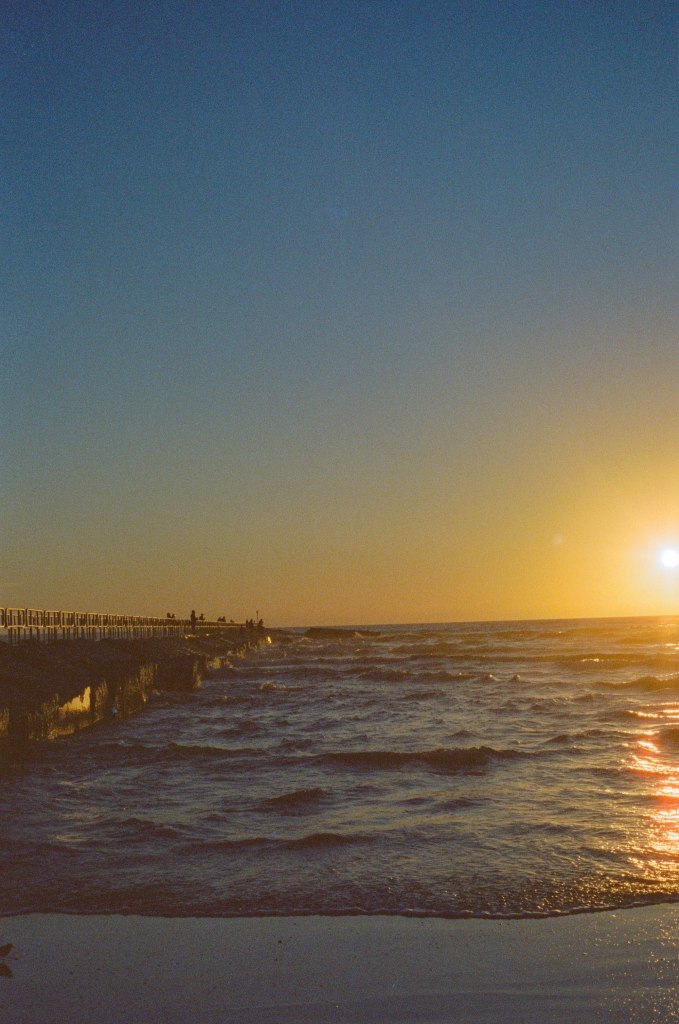
But for a camera that might not boast any of the fancy features that make some point-and-shoots go for hundreds of dollars, I was still quite pleased with the results. It rendered colors quite well and images were as clear and crisp as I could ask for.
And I think that’s a pretty good place to leave it. If you made it this far, thank you for reading through my ramblings.
Also, despite it being a good three months later, happy new year! I look forward to doing more shooting this year so stay tuned for more posts in the near future.
As always, check out more photos associated with this entry in the slideshow below. The first few will be the CineStill/Canon A-1 shots followed by the Ultramax/Sure Shot. All were developed by Gelatin Labs.
And, of course, enjoy a little playlist to go with this post.
Until next time.






 Mumbler